

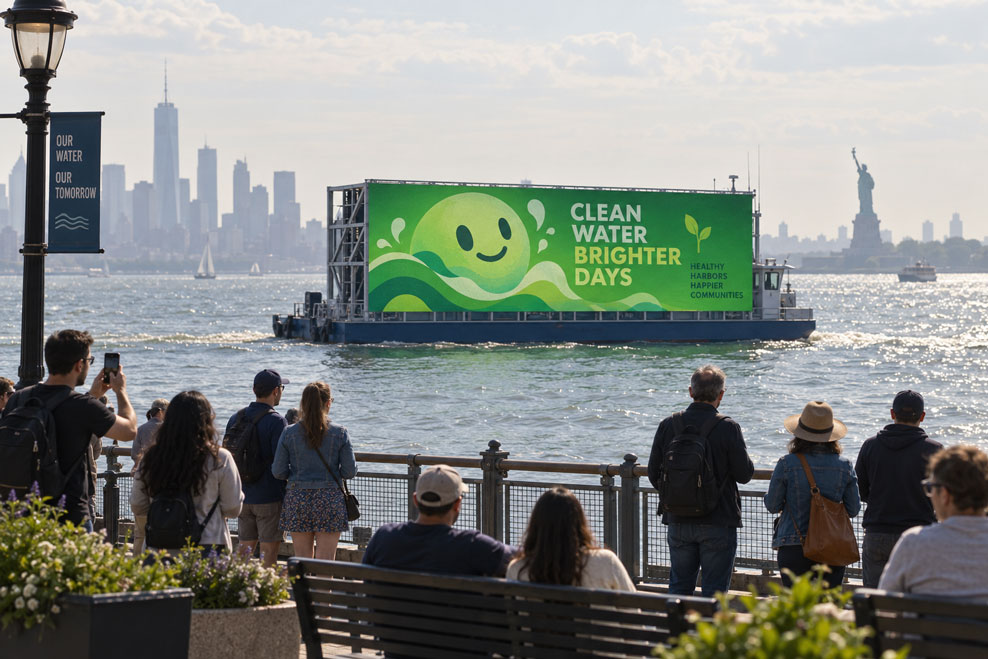
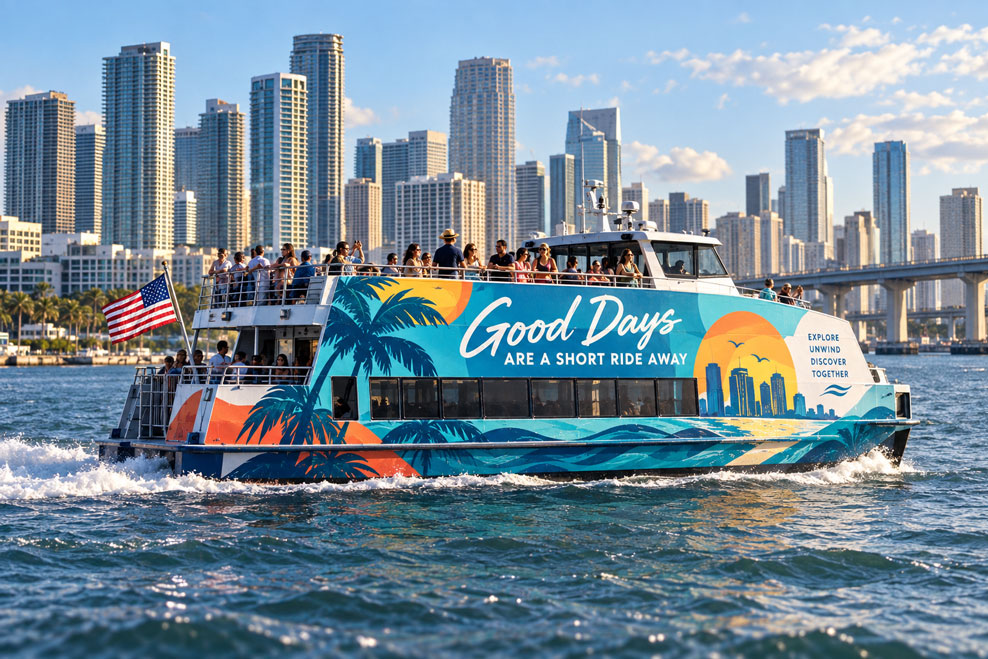
Kite banner advertising is an emerging coastal OOH format that uses large branded kites to create visible media above beaches and waterfront environments. For agencies and brand marketers weighing kite banner campaigns, the important question is not simply how a logo gets into the sky. The real planning questions are familiar OOH questions: who the format can reach, where it can operate, how often it can appear, what creative works at distance, how weather is managed, how execution is verified, and where the format belongs in the broader media mix.
KiteBanners has developed the format as a full service coastal media channel. Its model also combines creative adaptation, professional operators, offshore flight routes, recurring passes, weather monitoring, GPS flight logs, activation records, and campaign imagery. That makes the product easier to evaluate as media rather than as a one time promotional stunt.
This guide explains how kite banner campaigns are planned from brief to flight, what buyers should ask before approving a campaign, how the creative and operating model affect visibility, and where kite banner advertising can complement traditional OOH, digital OOH, sponsorships, experiential programs, and other aerial formats.
In This Article:
- How Kite Banner Advertising Works
- What Kite Banner Campaign Planning Looks Like
- How Flight Routes and Repeated Passes Create Presence
- Creative Design for Kite Banner Advertising
- Where Brands Can Use Kite Banner Advertising
- Measurement and Proof of Performance
- Weather, Logistics, and Operational Reliability
- Where Kite Banners Fit the Media Mix
- How Media Buyers Should Evaluate Kite Banner Campaigns
How Kite Banner Campaigns Work
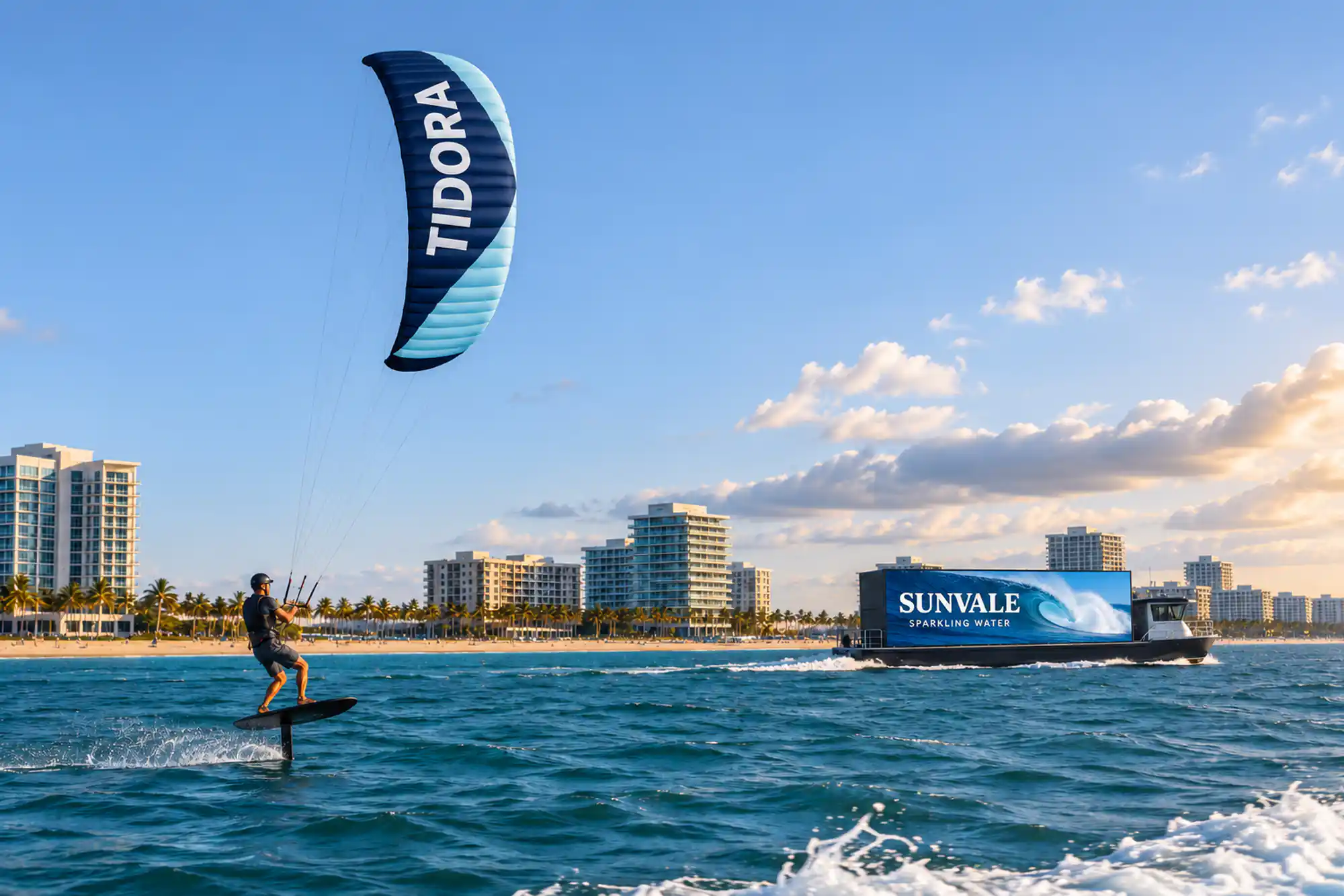
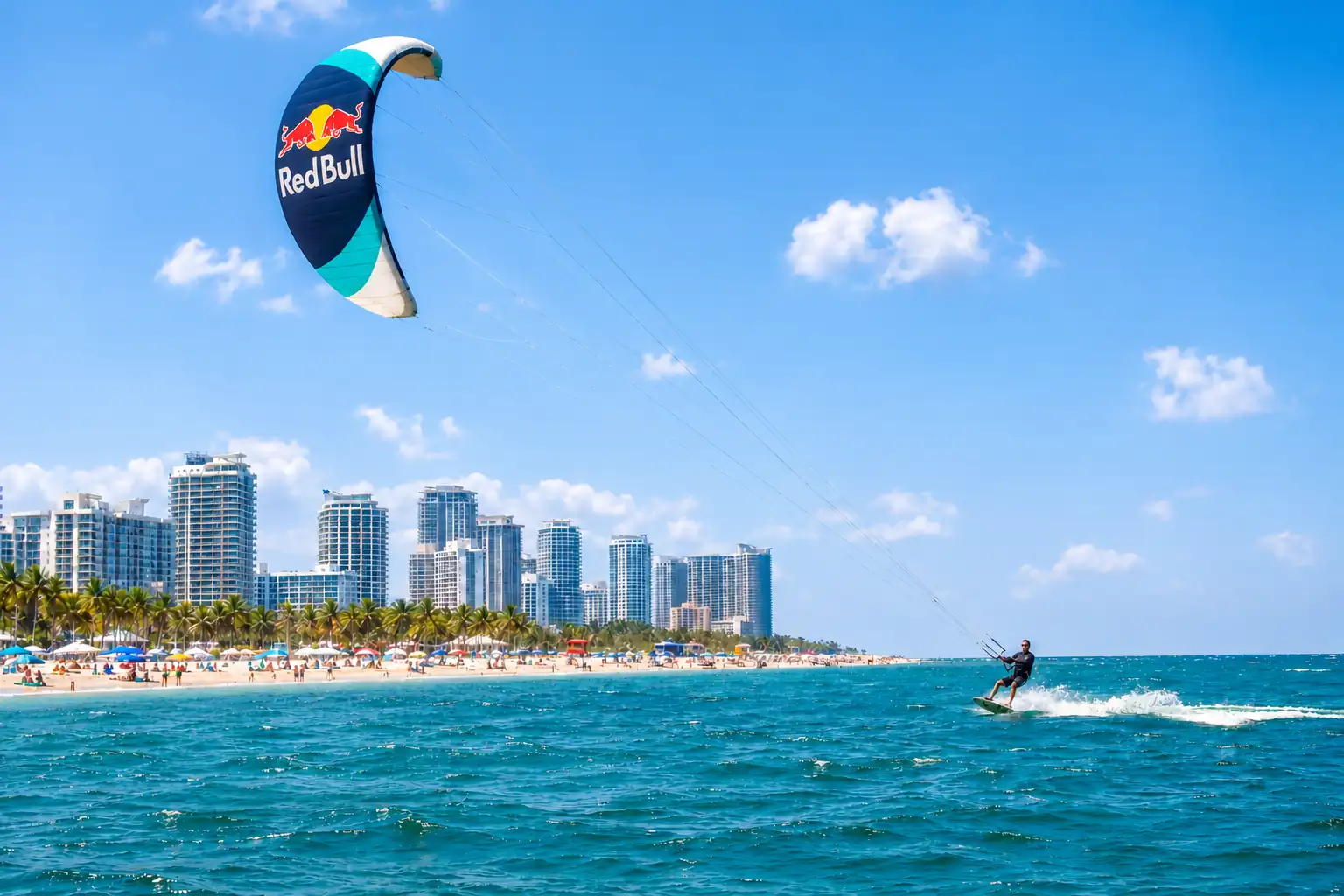
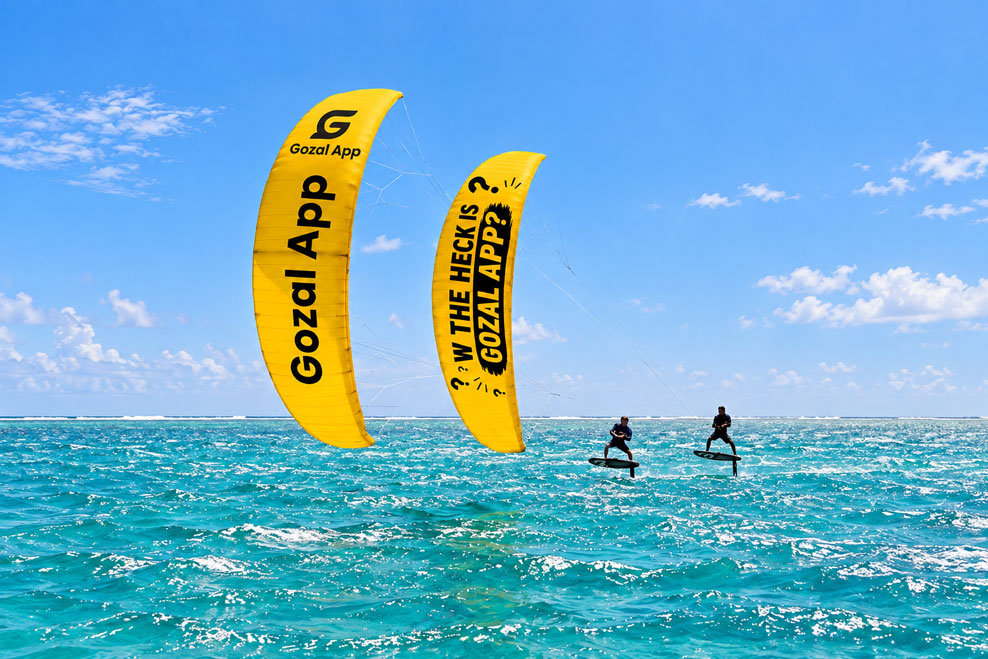
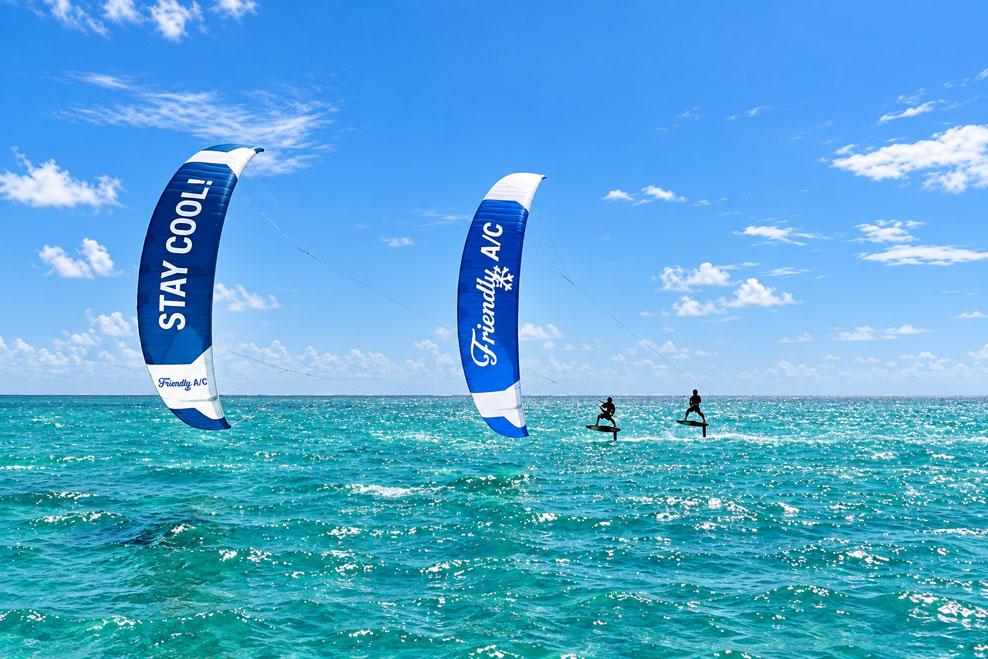
At its simplest, kite banner advertising uses a large branded kite flown over the water and along a beachfront audience zone. So the kite functions as a moving out of home display. Instead of occupying a fixed roadside structure, the branded surface travels along a planned coastal route while remaining visible from shore.
KiteBanners currently presents configurations of one, two, or three kites. A single kite can carry one dominant brand message. Two kites can then combine a logo with a short supporting message. Three kites can go further and create a larger coordinated visual sequence. The right configuration therefore depends on the campaign objective, creative idea, viewing environment, and desired visual footprint. Source: KiteBanners campaign formats.
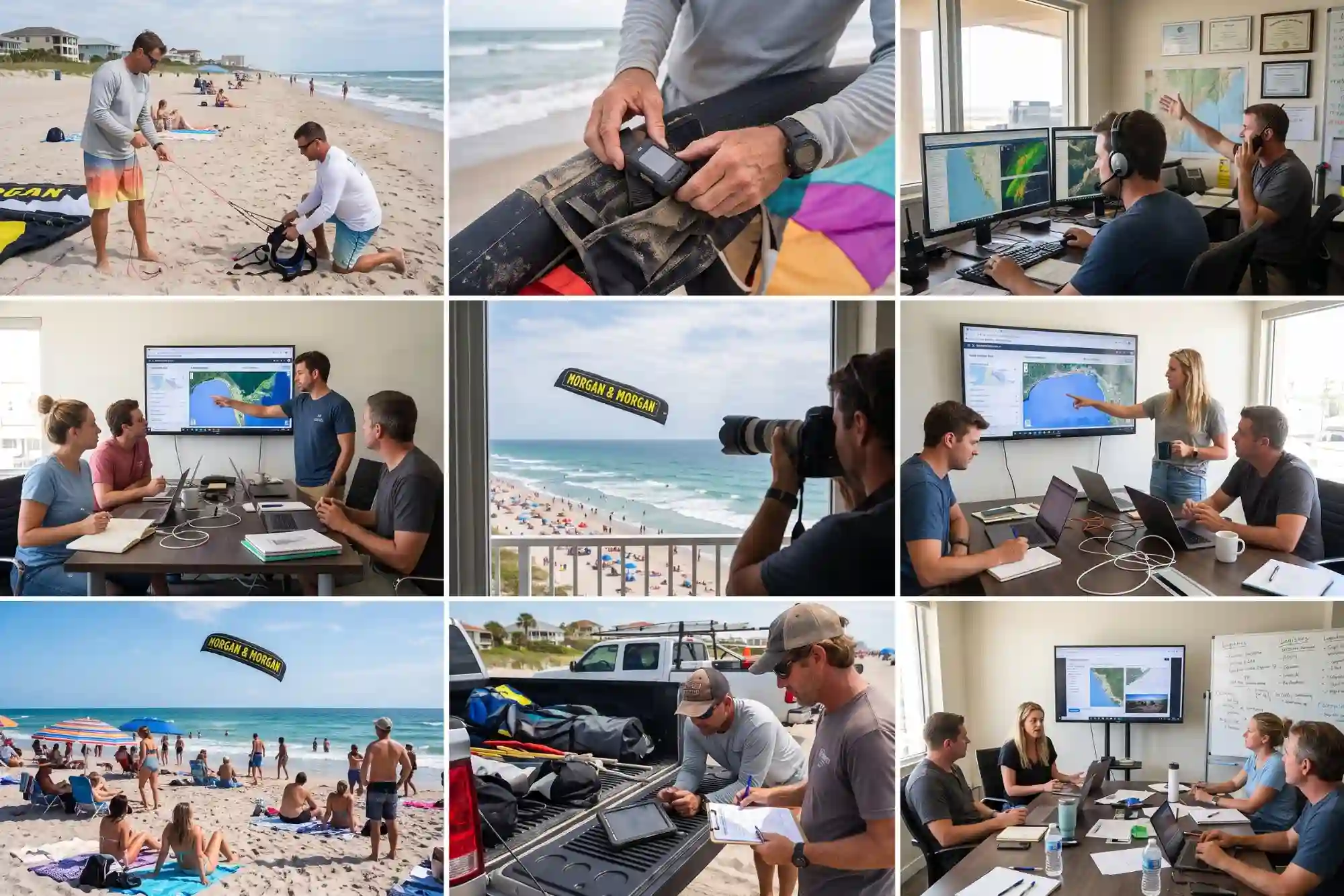
Professional operation matters because the media unit is also a live flight activation. KiteBanners states that its operators fly offshore and make repeated passes in front of busy beach areas. Campaign execution includes planning, scheduling, weather monitoring, logistics, and documentation. In short, this operating layer is what turns the kite from a promotional object into a repeatable media format.
Wind powered does not mean unplanned
Wind powers the kite itself, but a commercial activation still requires a defined operating process. The team needs to know the intended market, route, flight window, creative configuration, expected conditions, crew responsibilities, and documentation requirements before the activation begins.
So for the buyer, that means evaluating a campaign much like other nonstandard OOH inventory. So ask for the operating model, not only photos of the unit. A beautiful execution is useful, but repeatability, reporting, and contingency planning are what allow an agency to place the format into a professional media recommendation.
How Kite Banner Campaigns Are Planned
A strong kite banner campaign starts with the brief. The advertiser should define the audience, objective, market, timing, desired campaign frequency, creative assets, reporting expectations, and relationship to other media channels.
Step 1: define the objective
Awareness, launch visibility, event presence, destination marketing, seasonal relevance, and brand fame can all be valid objectives. The format is less appropriate when the primary goal depends on long copy, direct response mechanics, or precise one to one targeting. Naming the objective early helps determine whether kite banner advertising belongs in the plan at all.
Step 2: choose the coastal market
Market selection should follow the audience, not novelty. The planner should consider visitor profile, resident profile, hotel and resort concentration, event calendar, seasonal beach use, shoreline geometry, local rules, operating feasibility, and whether the brand has a meaningful reason to appear there.
South Florida is a clear current use case because KiteBanners has already documented campaigns in Delray Beach and Miami Beach. Those locations can serve different campaign purposes, so even within one regional market the planner should specify the stretch of coast that matters.
Step 3: set the campaign rhythm
A single activation can create a moment, but recurring activations are more consistent with media planning when the objective includes sustained visibility and repeated opportunities for exposure. Campaign schedules should follow audience patterns, dayparts, events, weekends, seasonal peaks, and realistic weather contingencies.
Step 4: adapt creative and approve production
The advertiser supplies brand assets and an approved message direction. The team then adapts the creative for large scale aerial viewing. Brand standards remain important, but the design must work at distance and in motion.
How Flight Routes Give Kite Banner Campaigns Presence
One of the defining characteristics of kite banner advertising is movement along the shoreline. A fixed billboard waits for traffic to pass it. A kite can move through the audience environment and return through the same visual zone multiple times during an activation.
KiteBanners states that professional operators fly approximately 100 to 150 yards offshore and make repeated passes in front of busy beach areas. The company documents routes through GPS logs and activation records. Source: KiteBanners How It Works.
Why route design matters
Distance alone should not decide a route. The most useful path is the one that aligns with the intended audience concentration and viewing conditions. A long route across lightly populated shoreline may be less valuable than repeated coverage of a shorter, busier zone. Media buyers should ask how the operator identifies priority beach areas, how routes vary by conditions, and how it reports completed coverage.
Frequency is an opportunity, not a guaranteed outcome
Repeated passes create repeated opportunities for the brand to be seen, but planners should avoid translating a flight path directly into guaranteed consumer attention. A GPS trace can confirm where the kite traveled. It cannot prove how many people looked at the creative, how long they looked, or whether the exposure changed behavior.
This distinction is important. Credible OOH planning separates operational facts from audience estimates and measured outcomes. If a proposal includes impression figures, the buyer should ask for the methodology, source data, assumptions, and whether the number represents potential audience, estimated exposures, or independently measured impressions.
Creative Design for Kite Banner Campaigns
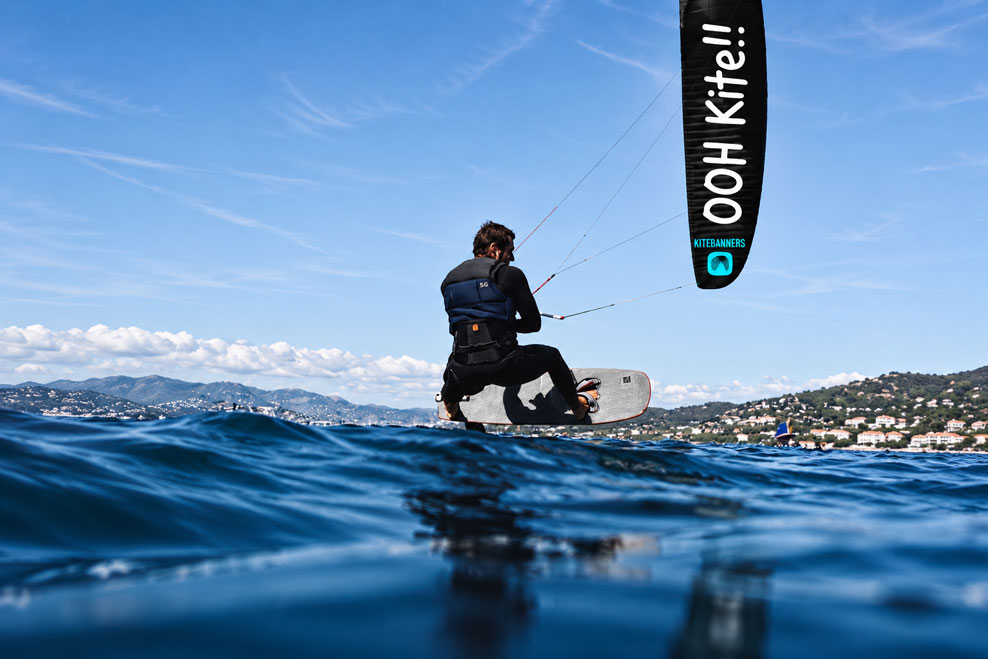
Kite banner advertising rewards simplicity. The creative is viewed outdoors, often at a distance, against a changing background of sky, water, buildings, and sunlight. The audience is not standing in front of a poster reading multiple lines of copy, so every element has to earn its place.
Lead with the brand
A large, recognizable logo can often do more work than a complicated headline. If a message is necessary, it should be short enough to understand quickly. Strong contrast, simple shapes, and clean typography therefore make the design easier to process.
Design for the actual viewing environment
Creative approval should include a distance test. A design that looks balanced on a laptop may still become unreadable at scale. Teams should review the art at reduced visual size, test contrast against light and dark backgrounds, and remove details that are not essential.
Use multiple kites with purpose
A two or three kite configuration should create a meaningful sequence, not simply repeat the same information. One kite can establish the brand, a second can carry a concise line, and a third can reinforce a campaign device or complementary visual. The message still needs to be understood without requiring the audience to read a paragraph across the sky.
Connect the creative to the larger campaign
The kite should feel like part of the same campaign consumers see in billboards, digital OOH, social, event media, retail, or video. Consistent brand assets and campaign language help the coastal placement reinforce existing memory structures instead of becoming an isolated execution.
Where Brands Can Run Kite Banner Campaigns
The best markets combine meaningful beach or waterfront activity with a brand audience that values the location. Coastal tourism and recreation are economically significant in the United States. NOAA reports that more than 2.5 million people are directly employed in coastal tourism and recreation, which contributes approximately $207 billion in annual GDP. Source: NOAA coastal tourism and recreation.
For a media buyer, however, national coastal scale is only the starting point. Buyers should approve a campaign market by market. Operating availability, local regulations, seasonality, weather, crowd patterns, and vendor resources can change.
Beaches and resort corridors
Hospitality, travel, suncare, beverages, apparel, sportswear, entertainment, financial services, automotive, real estate, and lifestyle brands can all have logical reasons to reach beach audiences. The important filter is relevance. A coastal placement is strongest when the audience and environment connect to the brand or campaign moment.
Seasonal peaks
Spring break, holiday weekends, summer travel, winter tourism in warm weather markets, surf competitions, festivals, airshows, art events, and other seasonal occasions can concentrate audiences. These windows can support focused campaigns, but higher demand and operational complexity also make advance planning more important.
South Florida as a proven market for kite banner campaigns
KiteBanners has publicly documented a RE/MAX Select Group campaign in Delray Beach and Miami Beach. The company describes the activation as a beach brand presence campaign with multiple passes during Spring Break peak hours. The case is useful because it demonstrates a real brand using the format in more than one South Florida coastal location without requiring unsupported assumptions about downstream sales or brand lift. Source: KiteBanners RE/MAX campaign example.
Measuring Kite Banner Campaigns and Proving Performance
Agencies should separate proof of performance from audience measurement. They are related, but they answer different questions.
Proof of performance answers, “Did it run?”
KiteBanners provides GPS flight logs, timestamps, activation summaries, campaign photos, and reporting. These materials can verify that an activation took place and show the route and execution coverage.
That documentation is especially useful for media teams managing a remote activation. A planner in New York or Chicago does not need to be standing on the beach to confirm that the unit flew in the agreed market and window.
Audience measurement answers, “Who had the opportunity to see it?”
Audience estimation requires additional data. That may include tourism figures, beach participation, local population, event attendance, hotel occupancy, mobile location data, or other market specific sources. Each source has limitations, so the vendor should document the methodology.
Outcome measurement answers, “What changed?”
Brand lift, site traffic, search activity, store visitation, inquiries, and sales require a measurement design beyond GPS. Depending on the campaign, an agency might use surveys, matched markets, search trend analysis, custom landing pages, promotional codes, or approved location data. If outcome evidence matters, pick the method before the campaign starts.
OAAA’s current work on OOH measurement reflects the broader industry’s focus on comparable and transparent audience data. Source: OAAA measurement initiative.
Weather and Logistics in Kite Banner Campaigns
Weather dependence is not a side note in kite banner advertising. It is part of the operating model. Media buyers should understand how the vendor monitors conditions, when a flight is delayed or canceled, how replacement windows are scheduled, and what documentation follows a completed activation.
KiteBanners states that weather or logistics cancellations roll into the next available campaign window without a lost activation. It also describes full service support for permits, flight crews, and real-time weather monitoring. Source: KiteBanners FAQ.
What agencies should require
A professional plan should define the target activation window, allowable scheduling flexibility, communication protocol, make good policy, escalation contact, creative readiness deadline, and proof of performance package. The buyer should know what happens before there is a weather issue, not learn the process after a cancellation.
Build flexibility into the timing
Campaigns tied to a single hour can carry more execution risk than campaigns with several usable dates or dayparts. When possible, planners should create a window that protects the campaign objective while giving operations enough flexibility to select appropriate conditions.
Where Kite Banner Campaigns Fit the Media Mix
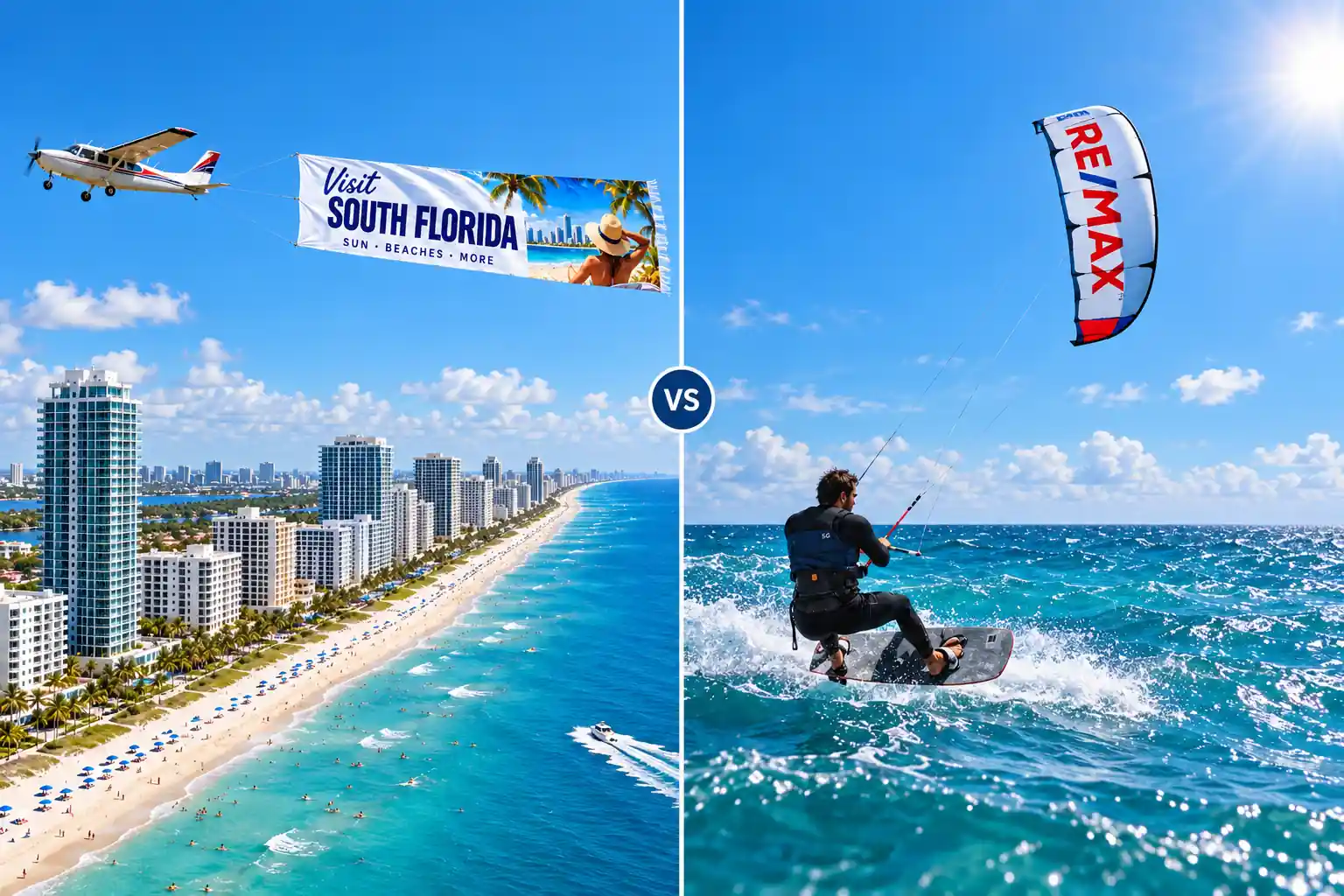
Kite banner advertising is most useful as an additional layer, not as a universal substitute. Billboards provide reliable roadside reach. Digital OOH provides flexible creative and network scale. Transit reaches commuting and mobility audiences. Experiential programs create direct interaction. Sponsorships connect brands to events and properties. Airplane banners can cover broad coastal areas quickly.
Kite banners add a different type of presence: a wind powered, moving visual unit that operates along the coastline and can remain within the beach environment where some other channels have limited inventory.
Integrated campaign example
Consider a beverage brand launching a summer product. Digital OOH could build frequency in the city, retail media could support purchase, social video could explain the product, experiential sampling could create trial, and kite banner advertising could add coastal visibility during high beach use periods. The formats do different jobs, but a consistent creative platform can make them reinforce one another.
Agency value of kite banner campaigns
For agencies, unusual media is most useful when it can still fit familiar planning disciplines. A format becomes easier to recommend when the vendor can provide market information, clear creative specifications, an operating schedule, documented completion, realistic limitations, and a transparent role within the plan.
How Media Buyers Should Evaluate Kite Banner Campaigns
Before recommending kite banner advertising, a media buyer should evaluate the campaign with the same discipline applied to any other OOH investment.
Audience and market fit
Ask which coastline the campaign will cover, why that area matches the target audience, what seasonal and visitor data support the choice, and whether any event or daypart creates a stronger opportunity.
Creative feasibility
Confirm the kite size, art specifications, number of kites, expected viewing distance, message limits, production timeline, approval process, and whether the brand assets need adaptation.
Operations
Review crew responsibilities, permits, launch process, route planning, weather thresholds, cancellation policy, replacement windows, communication, and safety procedures. Operational detail is part of the media product.
Reporting
Define exactly what the vendor will deliver after each activation and at campaign completion. GPS route files, timestamps, images, video, activation summaries, and consolidated reporting can document execution. If the vendor includes audience or outcome metrics, review that methodology separately.
Budget scope
KiteBanners does not publish standard campaign rates in its public blog content because scope varies. Buyers should expect cost to depend on market, campaign duration, activation frequency, number of kites, creative and production needs, geographic coverage, timing, content requirements, and campaign objectives. A custom proposal is more useful than a generic rate when these variables materially change the plan.
Kite Banner Campaigns: The Bottom Line
Kite banner advertising gives brands a distinctive way to extend OOH visibility into beach and waterfront environments. The format works through large branded kite displays, professional offshore operation, repeated passes, creative designed for distance, weather aware scheduling, and documented campaign execution.
For media buyers, the strategic value is not novelty alone. The stronger case is coverage. Kite banners can add physical brand presence in locations where traditional roadside, transit, and indoor media may lose contact with the audience. The format is most credible when it is planned with clear objectives, realistic operating assumptions, transparent measurement language, and a defined place in an integrated campaign.
Evaluating kite banner advertising for an upcoming brief?
Review KiteBanners’ campaign formats and market information, download the info deck, or discuss the audience, coastline, timing, creative, and reporting requirements with the KiteBanners team before building the format into your recommendation.