
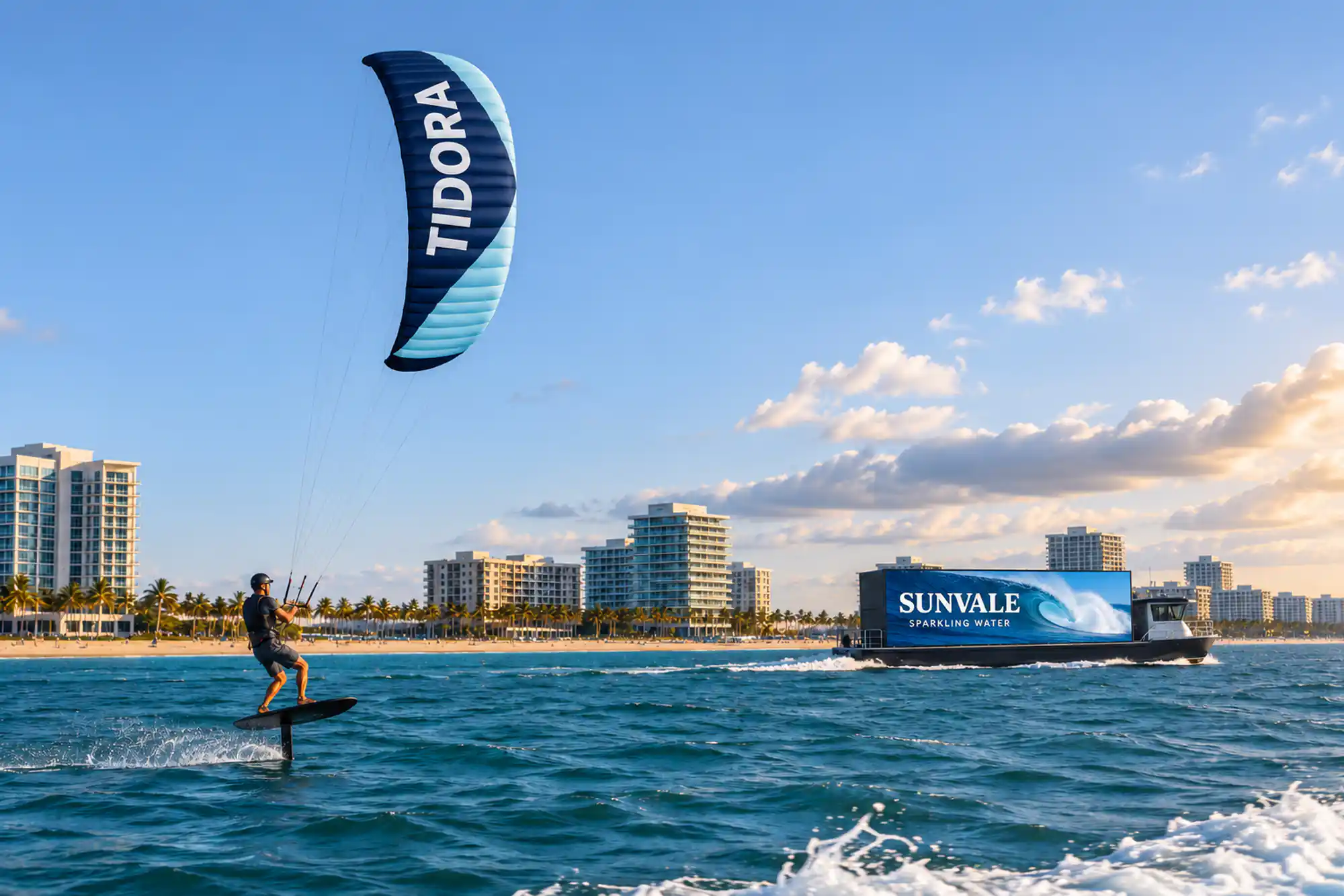
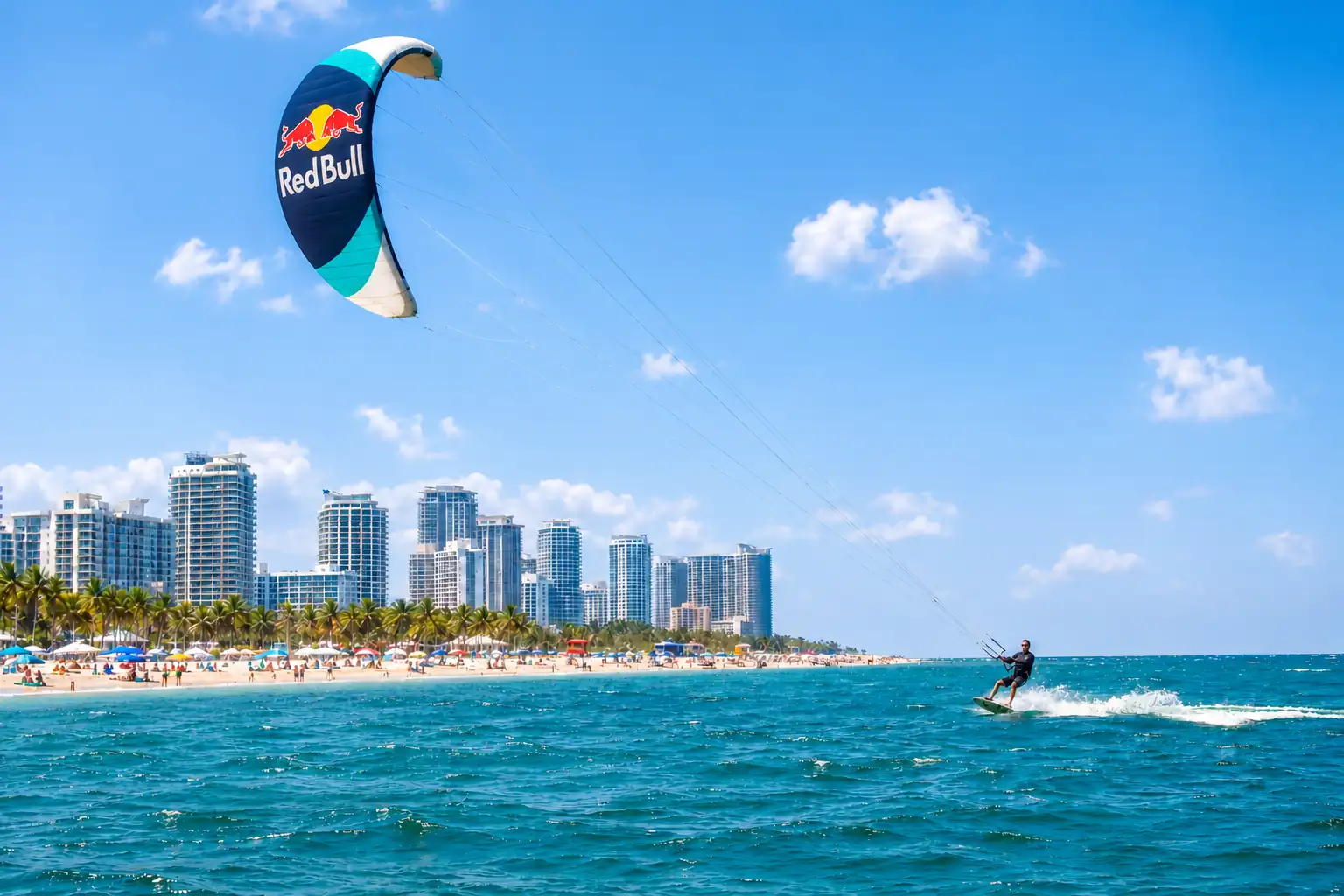
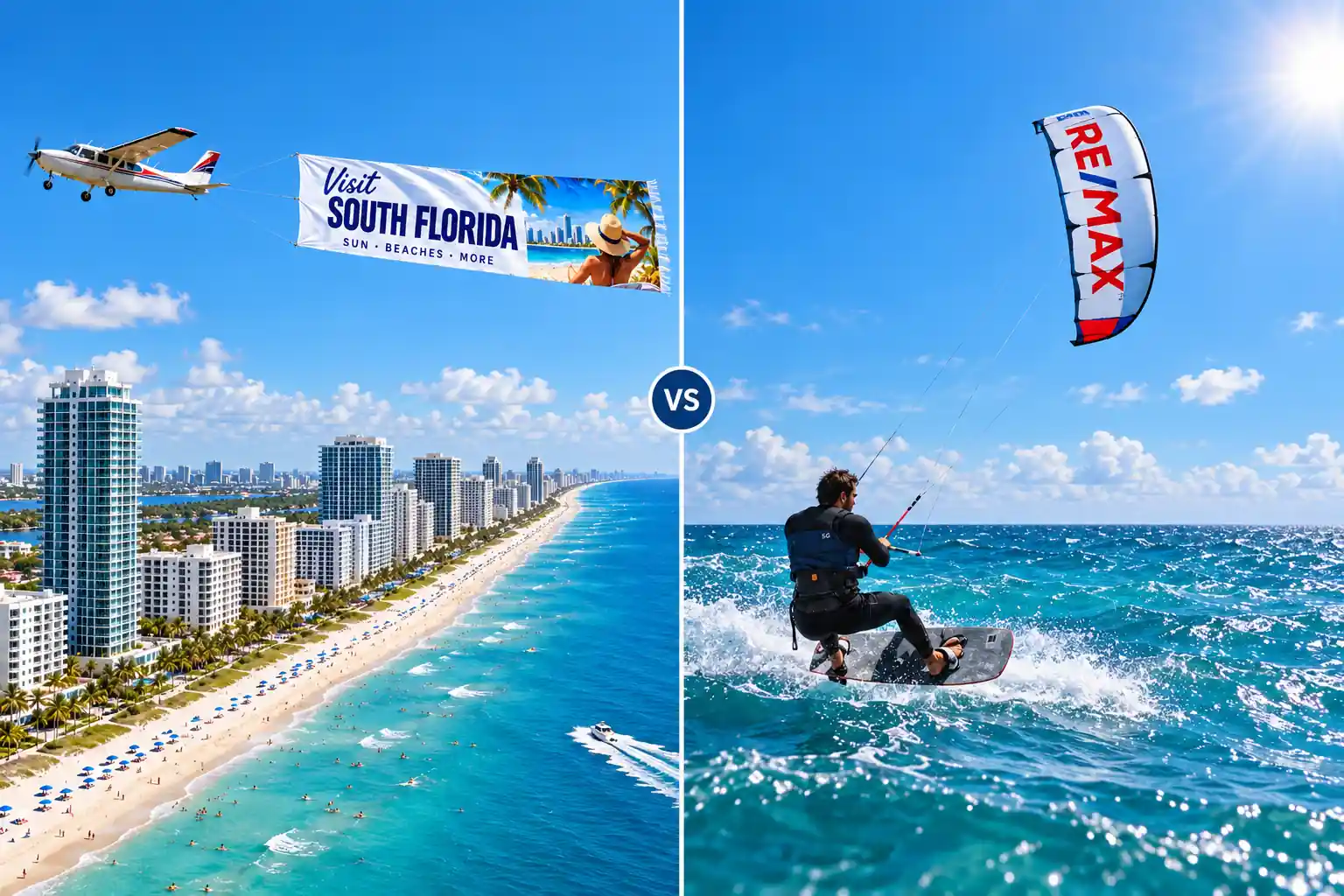
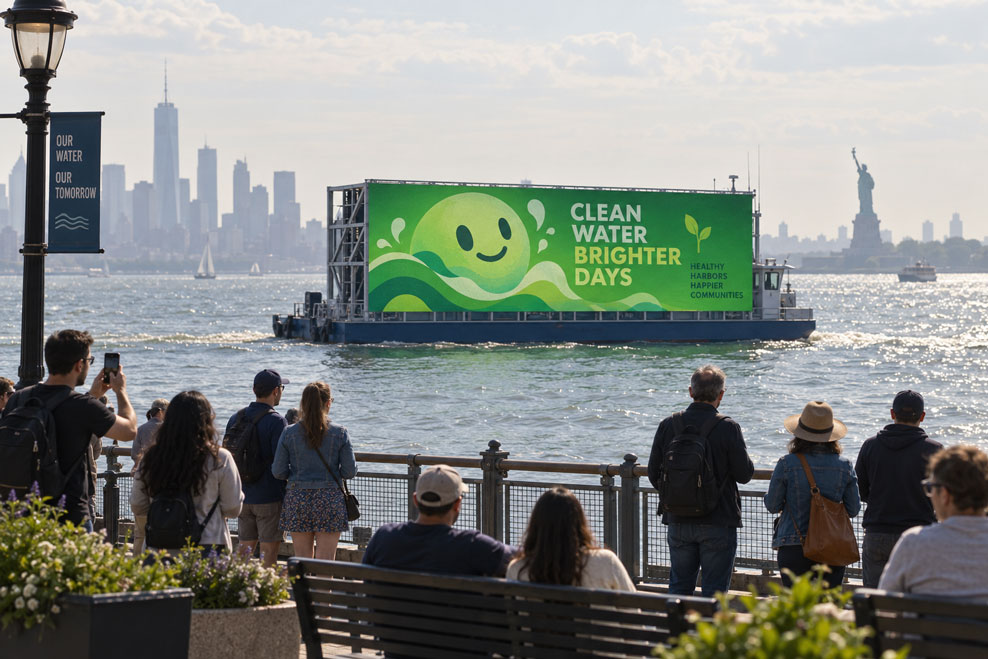
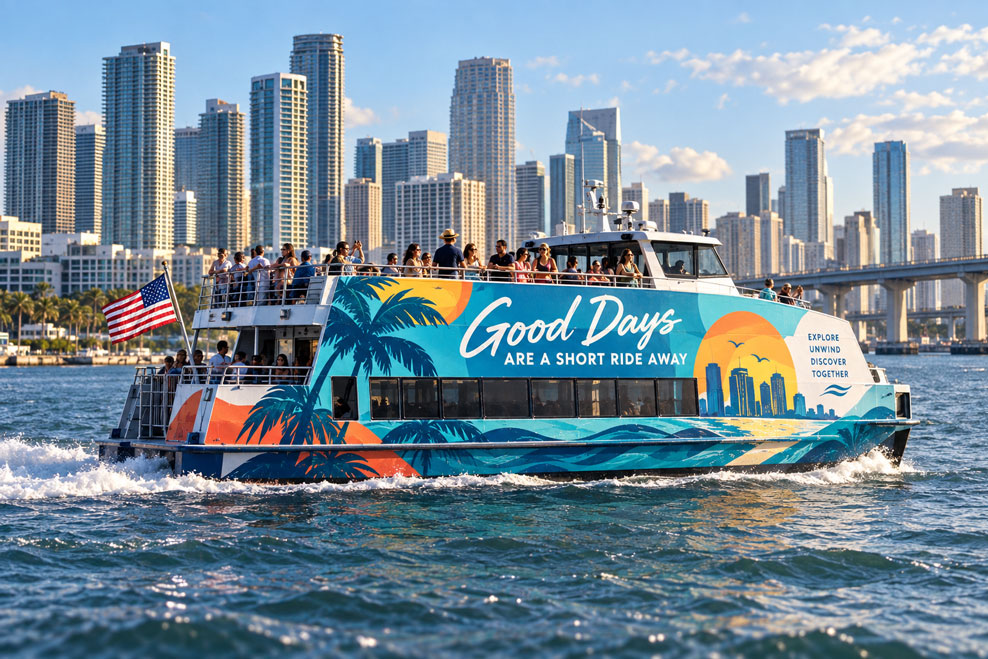
Spend a weekend on Miami Beach in season and you will see a boat cruise past the swimmers. It carries a giant LED screen on its deck. Fewer people have seen a large branded kite hold its position over the sand for an entire afternoon. Both put an advertiser in front of a beach audience, and planners file both under water based media and coastal OOH. Inside a real media plan, though, kite vs boat advertising comes down to two very different jobs.
That is why OOH planners, media buyers and brand teams keep weighing kite banner advertising vs boat advertising. It comes up most on summer, Spring Break and event campaigns. One format moves a digital screen along the shoreline. The other anchors one large message above a specific beach. The right pick depends on the campaign goal and the stretch of coast that matters. It also depends on when the audience is there and how the activation gets documented afterward.
This guide covers how each format works and how the two compare on reach, frequency, creative, weather, regulation and proof of performance. It also shows where each one fits in an integrated media plan, including cases where a billboard boat is the better call.
In This Article:
- Two coastal formats, two different jobs
- How digital billboard boats work
- How kite banner advertising works
- Kite banner advertising vs boat advertising on reach and frequency
- Creative, visibility, and the viewing environment
- Weather, regulation, and operating limits
- Proof of performance and campaign documentation
- Choosing between kite vs boat advertising
- Using both formats in an integrated media plan
Two coastal formats, two different jobs
Most out of home advertising stops where the parking lot ends. Roadside billboards, transit shelters and digital OOH screens do a good job of reaching people on the way to the coast, then lose them once they cross the dune line. Coastal OOH advertising exists to cover that gap: the hours people spend on the sand, on the water and along the boardwalk.
Billboard boats and kite banners both work in that space, and both get grouped under alternative OOH formats. The overlap ends there. A boat is a moving platform that travels a route and passes audiences one stretch at a time. A kite banner is a fixed presence that stays over one location while the audience settles in around it.
For a media planner, that difference shapes everything downstream. It decides how often a beachgoer sees the message and what the creative can be. It also sets which hours the format covers and what documentation comes back after the flight. Treating the two as interchangeable “beach advertising” usually leads to a plan that underuses both.
How digital billboard boats work
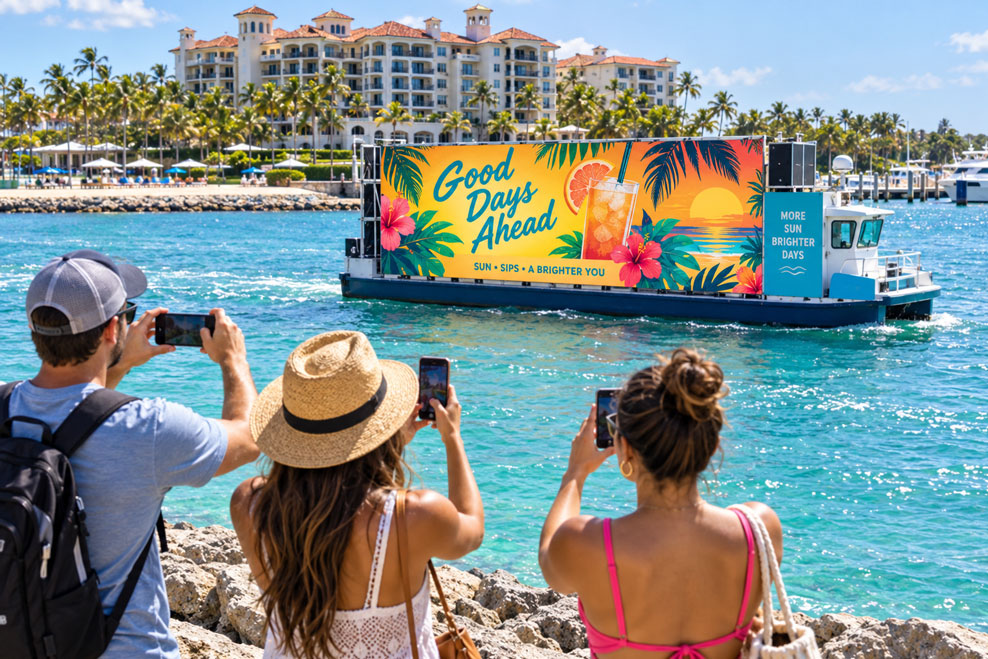
A digital billboard boat is a vessel carrying one or more large LED screens, usually mounted back to back so the display faces both directions. The boat runs a route parallel to the shoreline, through a bay or along a busy waterfront, and plays advertiser content while it moves.
Many operators sell time on the screen in a rotating loop, much like a roadside digital billboard. Your spot plays, then the next advertiser’s spot plays, and the cycle repeats. Some sell full takeovers for a brand that wants the screen to itself. It is worth asking which model you are buying, because a shared loop changes the math on how often your creative is actually on screen when the boat passes a given beach.
Where billboard boats are strong
- Motion and video creative, including multiple messages in one flight
- Evening and nighttime visibility, since the screens are lit
- Coverage of a long stretch of shoreline or waterfront in a single run
- Flexibility to change creative quickly between days or dayparts
Where billboard boats run into trouble
Because the boat moves, any individual beachgoer sees it pass and then lose it until the next lap. Screens on the water have also drawn sustained pushback in several markets over aesthetics and light, which has turned regulation into a real planning variable. We cover that in the weather and regulation section below.
How kite banner advertising works
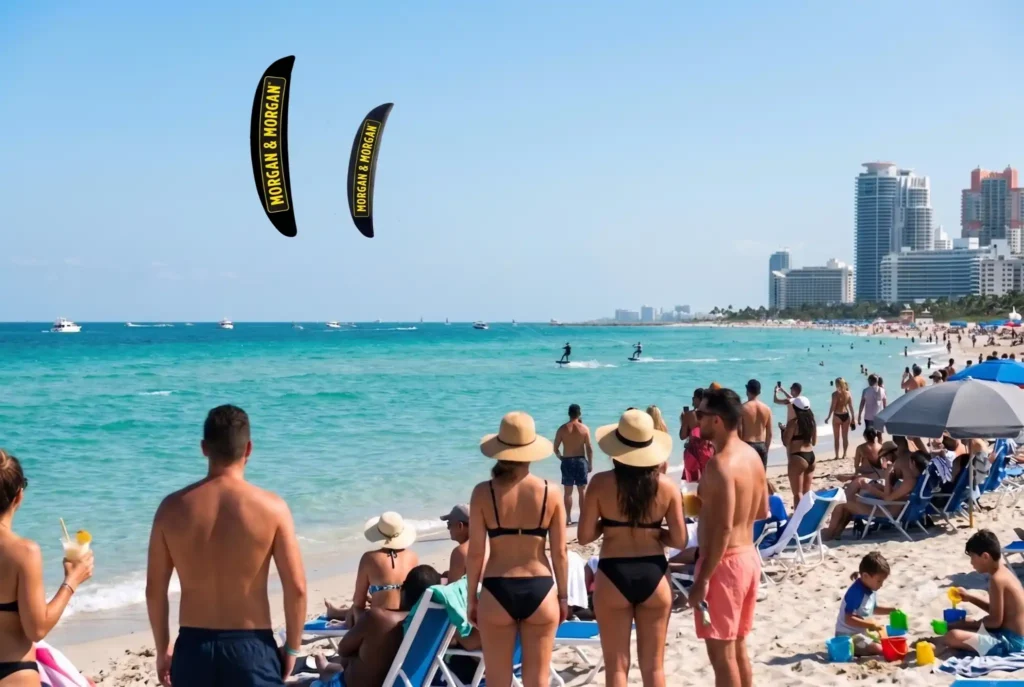
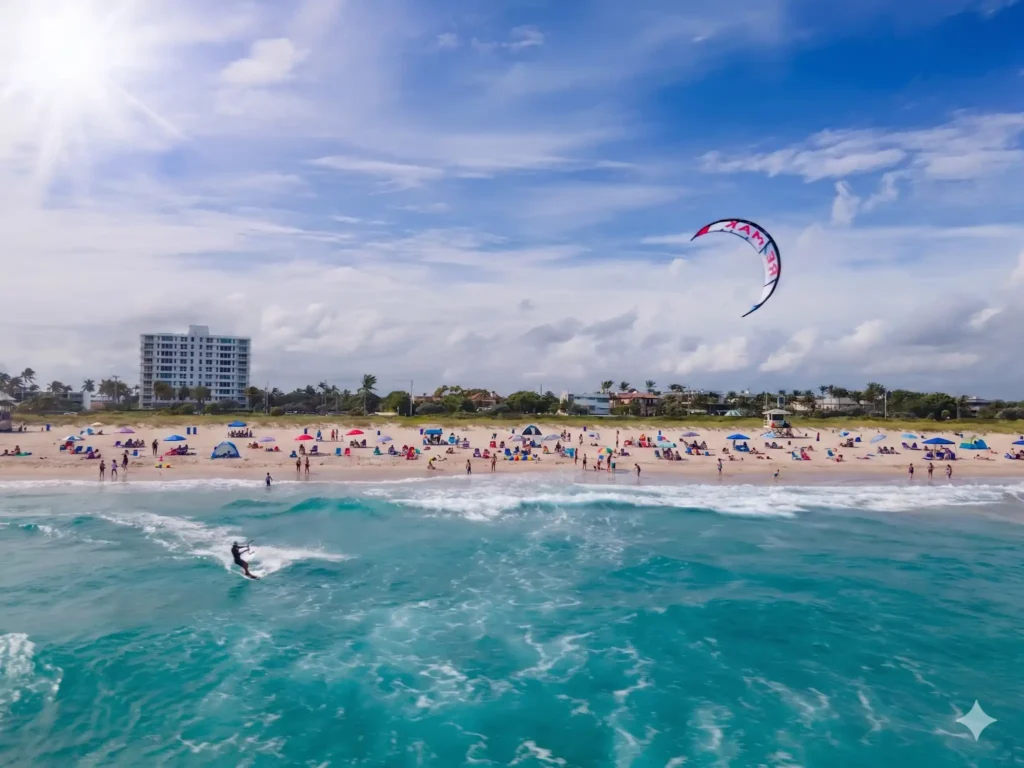
Kite banner advertising places a large format branded display in the sky above a beach or waterfront. Trained operators fly the kite from a set location, and it holds its position for the flight window instead of passing through. The audience is the people who are already on the sand: sitting, swimming, eating and walking the shoreline, often for hours.
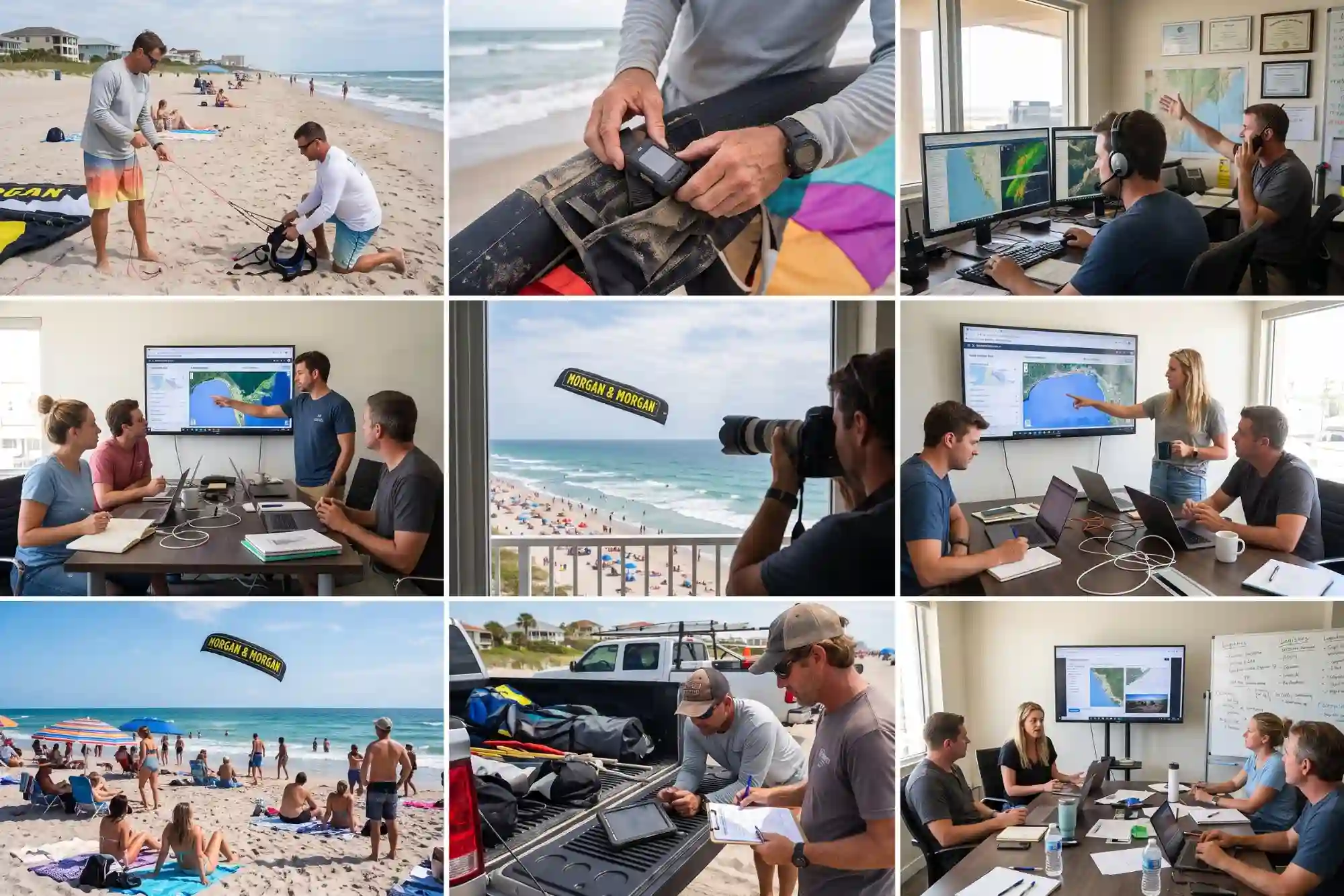
At KiteBanners, a campaign covers more than the kite itself. It typically includes campaign planning, creative adaptation for the format, activation logistics, professional operators, weather monitoring, GPS flight tracking, and activation photography or video. That operating layer is what turns kites from a one off promotional stunt into a repeatable media channel a planner can schedule across multiple days and markets.
Where kite banners are strong
- A fixed, large presence over one specific beach for an extended period
- Long viewing windows, because the audience stays put
- Clean visual environment with no other advertisers sharing the space
- Natural fit with photography and social content shot on location
Where kite banners have limits
Kite banners are a daylight format, and flights depend on steady wind within a workable range. The creative is static for the duration of a flight. A kite also covers one location at a time, so reaching several beaches means more kites, more operators or more days on the schedule.
Kite banner advertising vs boat advertising on reach and frequency
Reach and frequency are where the two formats pull furthest apart, and where planners most often get the comparison wrong.
Coverage versus presence
A billboard boat trades depth for breadth. It can pass several beaches in one run, so the number of distinct people who catch at least a glimpse of the screen can be large across a day. The tradeoff is that each exposure is brief, and with a shared loop, your creative may only be on screen for part of each pass.
A kite banner trades breadth for depth. It reaches the people at one location, but those people can see the display repeatedly over the course of their visit. Someone who spends an afternoon on the sand looks up many times. For campaigns where repeated exposure and message recall matter more than raw coverage, that pattern of frequency is the reason to choose the format.
What we can and cannot claim about audience size
Neither format comes with a standardized, audited audience currency the way roadside billboards do. Any audience figure for a beach or a boat route is an estimate built from attendance counts, tourism data or observed crowd sizes, and it should be labeled that way in the plan. We will not quote impression counts we cannot back up, and planners should hold every coastal vendor, including us, to the same standard. Our guide to OOH measurement for coastal campaigns goes deeper on reach, frequency, and what verification can actually show.
Geographic targeting
Boats target a route. Kites target a place. Say the brief names a specific beach, event footprint or resort frontage. Think Miami Beach during Art Basel week or a Jersey Shore beach on a holiday weekend. A kite banner lets you put the brand exactly there. If the brief is about general presence along a whole waterfront, a boat covers more ground per hour.
Creative, visibility, and the viewing environment
The creative rules for each format follow directly from how people encounter it.
Designing for a moving screen
Boat creative works like digital OOH with a shorter look. Motion helps catch the eye, but the viewer is often far away, and the boat is moving, so fine print, small product shots, and dense copy disappear. QR codes and URLs are hard to act on from a beach towel. The best boat spots tend to be bold, high contrast and simple enough to land in a few seconds.
Designing for a kite in the sky
Kite creative works more like a classic billboard viewed against open sky. It is static, so the job is one idea: a large logo, a short line, and strong color contrast against blue sky and bright sun. Because the audience sees it many times, a kite can carry a slightly more memorable line than a passing screen can, but it still rewards restraint. We adapt each advertiser’s creative to the format before production so it reads at a distance.
Brand environment
Context matters for brand safety and perception. A boat screen on a shared loop puts your spot next to whatever else is in rotation that day. A kite banner is a single brand in the sky. LED screens on the water have also become a point of local complaint in some beach communities. Hospitality, real estate and luxury planners should weigh how the audience feels about the medium, not only whether they notice it.
Weather, regulation, and operating limits
Both formats operate outdoors on the coast, so neither one is immune to conditions. The limits just show up in different places.
Weather
Kite flights need steady wind within a workable range. Too little and the kite will not hold; too much and the operator grounds it for safety. That is why KiteBanners builds weather monitoring into every campaign and plans makeup windows into the schedule instead of treating a calm day as a surprise. Billboard boats depend on sea state. Rough water, small craft advisories and storms can cancel runs, and an LED screen on a pitching deck is harder to read even when the boat does go out.
Regulation of advertising vessels
Regulation is the bigger planning risk for boats. Miami Beach has restricted advertising vessels in some of the waters within its jurisdiction, and the question of how far those rules reach into ocean waters has been contested for years. New York went further and passed a statewide law in 2019 prohibiting vessels from operating digital billboards on its navigable waters. Several other coastal communities have adopted local rules on waterborne signs. Before you commit budget to a billboard boat in any market, get it in writing. The operator should confirm exactly where the vessel may display advertising during your dates.
In Florida there is a seasonal layer as well. Artificial light near nesting beaches disorients sea turtles, and the Florida Fish and Wildlife Conservation Commission publishes wildlife lighting guidance that many local ordinances build on. Brands that care about how they are perceived on the coast should check how a lit screen at night lines up with local nesting season rules.
Regulation of kites
Kites have their own framework. In the United States, moored kites fall under the FAA’s rules for moored balloons and kites, which cover things like height and proximity to airports, and individual beaches have their own rules on activity and permits. Handling that compliance is part of what a professional operator does, and it is a fair question to ask any kite vendor before you book. Because kite banners fly in daylight and carry no lighting, the turtle lighting issue does not apply to them.
Proof of performance and campaign documentation
Agencies need to show a client that the campaign ran as sold. Both formats can document execution, and both have the same limit: documentation proves the media ran, not that anyone paid attention.
What boat operators can provide
Ask a billboard boat operator for route logs showing where the vessel traveled and when, plus play logs showing how many times your spot ran in the loop. Photos and video of the screen on the water help with client reporting. If the operator cannot show your spot’s share of the loop at specific locations, treat any coverage claim with caution.
What KiteBanners provides
KiteBanners campaigns include GPS flight tracking and activation photography or video. The GPS data shows where each kite flew and for how long, which is clear proof of execution and flight coverage. It does not prove impressions, attention, brand lift or sales, and we do not present it that way. When a client wants outcome measurement, the right tools are the same ones used for other OOH: brand lift studies, search and social lift in the market, promo codes or landing pages tied to the activation, and comparisons between active and inactive dates.
The photography and video side often earns its own value. A brand in the sky above a crowded beach makes strong content for social channels, PR, and the agency’s own case study, which extends the activation past the day it flew.
Choosing between kite vs boat advertising
Most briefs settle the kite vs boat advertising question quickly. Look at the objective, the hours that matter and the location.
When a billboard boat makes sense
- The campaign needs video or several rotating messages
- Evening or nighttime visibility is the priority, such as a waterfront event after dark
- The goal is broad presence along a long waterfront more than depth at one beach
- The operator can confirm in writing that the route is permitted during your dates
When kite banner advertising makes sense
- The brief names a specific beach, event footprint, or resort frontage
- The audience stays for hours, so repeated exposure builds recall
- The brand wants a single, uncluttered presence instead of a shared loop
- Daytime beach hours are when the target audience is reachable
- The campaign will reuse activation photos and video in social or PR
Brand fit matters too. Suncare, beverage, sportswear and action sports brands live where beachgoers spend the day, which suits a daytime kite. Hospitality, tourism and real estate brands often care about a specific frontage or destination, which also favors a fixed presence. Entertainment brands promoting a night event may get more from a lit screen on the water.
What drives the cost of each
We do not publish rates, because no two coastal campaigns are scoped the same way. For kite banners, cost depends on the market, the number of kites, campaign duration, how many activation days are scheduled, geographic coverage, creative and production needs, timing around peak periods such as Spring Break, and the campaign objectives. For boats, ask how the buy is structured: a share of a loop, a full takeover, the number of hours on the water and the route. Comparing a loop share to a dedicated kite on price alone misses what each one delivers.
Using both formats in an integrated media plan
Neither format replaces roadside billboards, digital OOH, transit, sponsorships or other aerial advertising. The strongest coastal plans treat both as layers that extend an existing media mix onto the sand and the water.
A practical sequence looks like this. Roadside and transit OOH reach the audience on the way to the coast. A kite banner holds the brand over the beach during the day, where people spend the most time. Where it is permitted, a billboard boat or a waterfront DOOH screen picks up the evening crowd near a venue or event. Social and digital retargeting in the same geography close the loop for people who saw the activation and want to act on it.
Other aerial formats sit alongside these too. Our comparison of kite banners vs. airplane banners covers how a banner plane’s coverage differs from a kite’s fixed presence. Brands already use kites as a working channel inside their coastal plans. The KiteBanners campaign for RE/MAX is one example, and we can walk planners through how we ran it.
For markets like South Florida, the Jersey Shore and coastal California, the timing question matters as much as the format. Spring Break, summer holiday weekends and major events such as Art Basel Miami Beach concentrate the audience. Booking early gives you a better shot at the beaches and dates that matter most to the brief. Our overview of coastal OOH advertising covers how to plan across those seasons.
Planning your next coastal campaign
Kite vs boat advertising comes down to presence versus coverage. A digital billboard boat moves a lit, changeable screen along the shoreline. It suits video creative, nighttime visibility and broad waterfront reach, as long as the route is permitted. A kite banner holds one brand over one beach for hours. That gives static creative the repeated exposure it needs and gives location focused campaigns a clear anchor.
Both formats share real planning considerations. Each needs a weather plan. Each faces rules that shape where it can operate, and boats face more of them. Documentation should prove execution clearly without overstating what it shows. Used well, either one extends an integrated campaign into the coastal environment where most outdoor media stops.
Building a summer, Spring Break or event campaign where a specific beach or waterfront matters? KiteBanners can map out how a kite activation fits alongside the rest of your OOH plan.
Contact KiteBanners to talk through your market, dates, and objectives, or to request our media information and a custom campaign recommendation.