
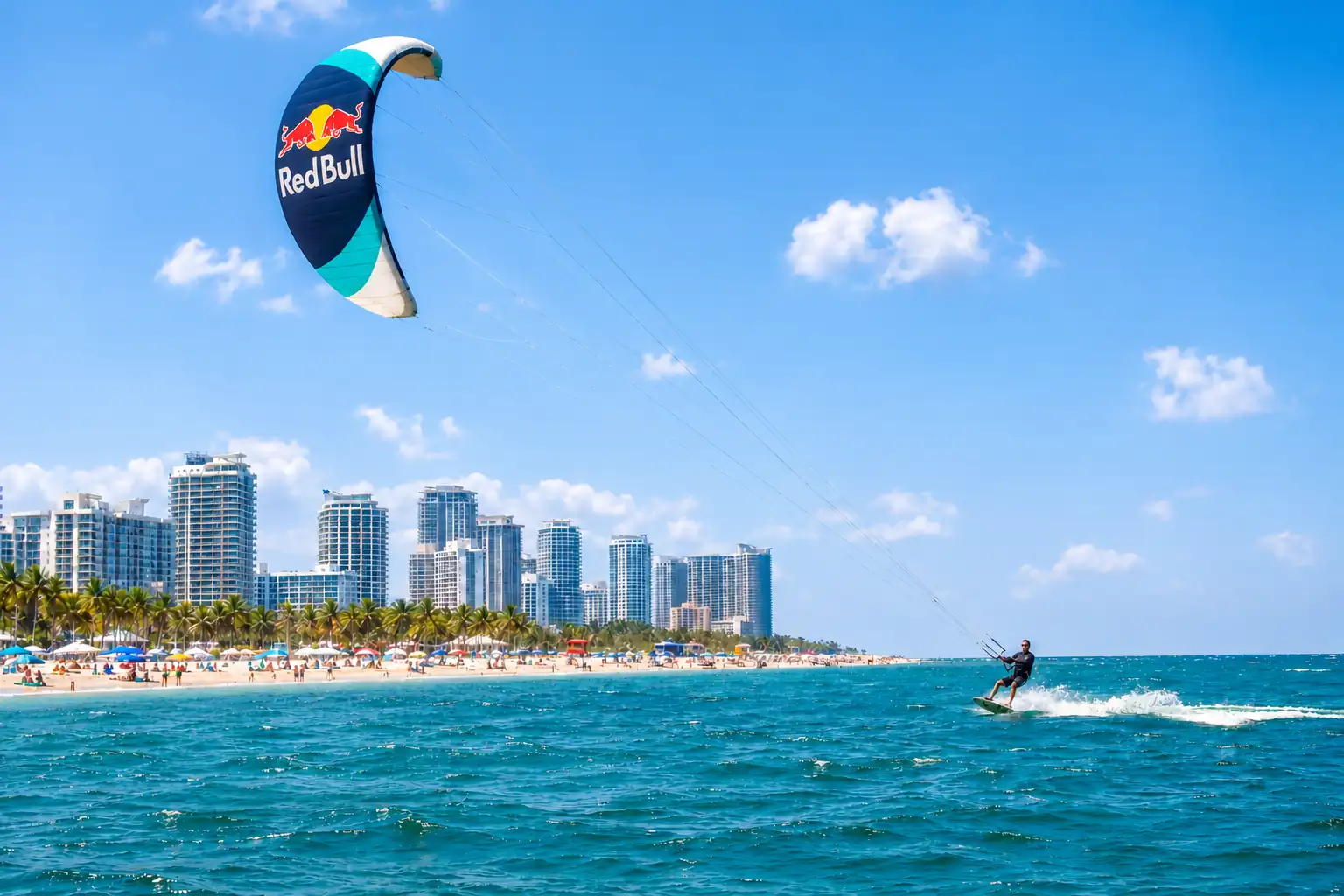
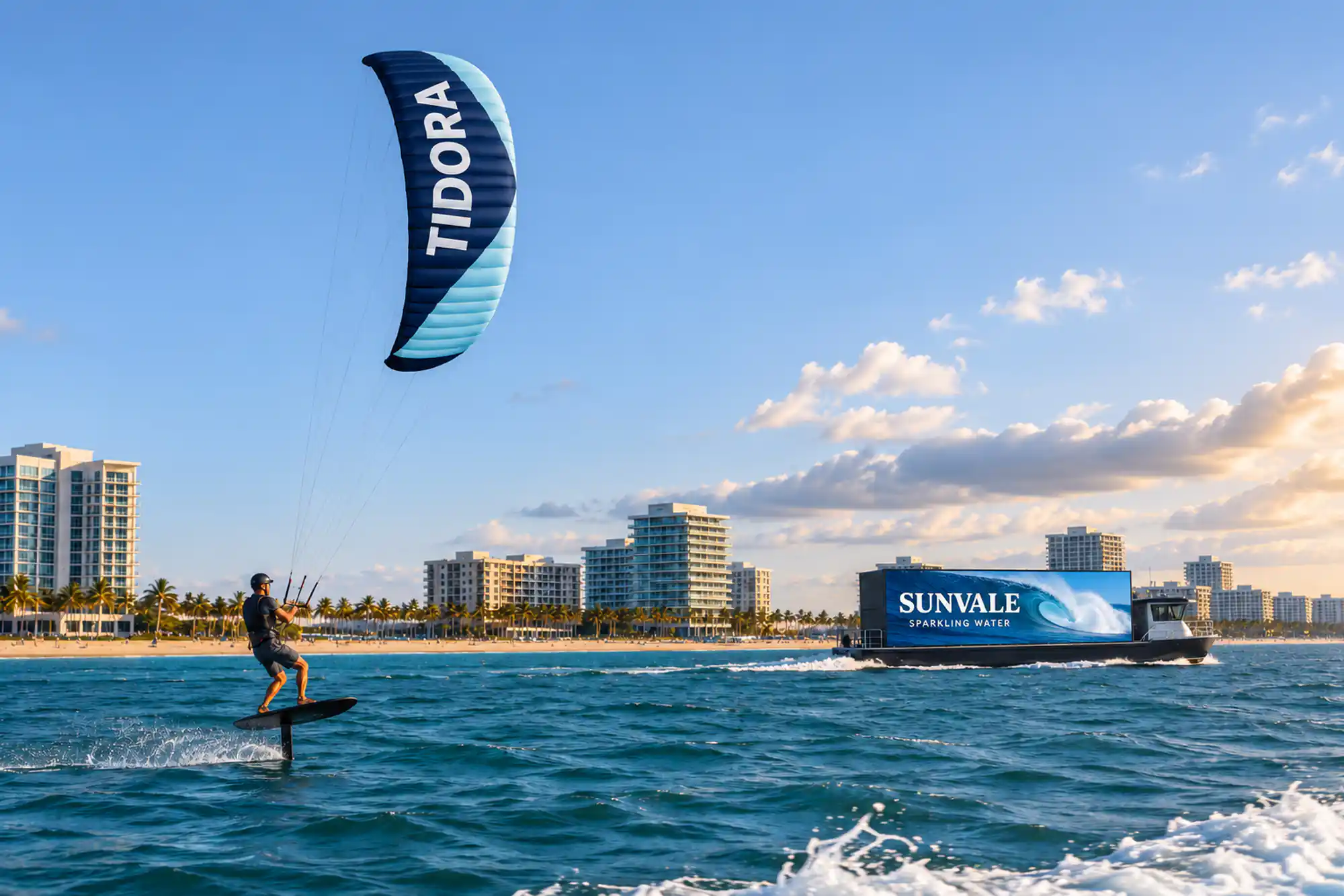
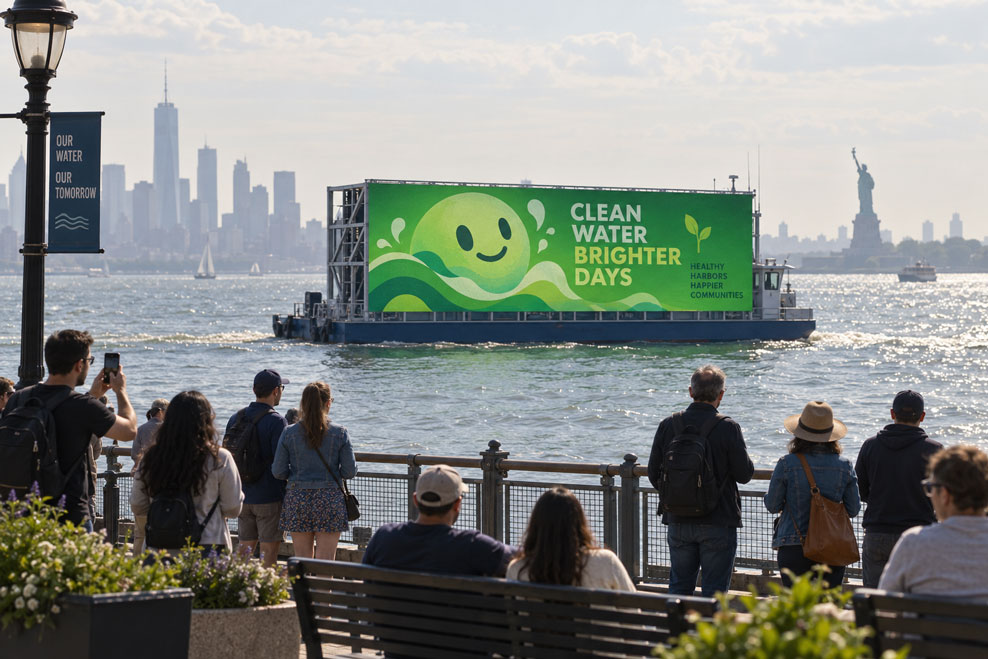
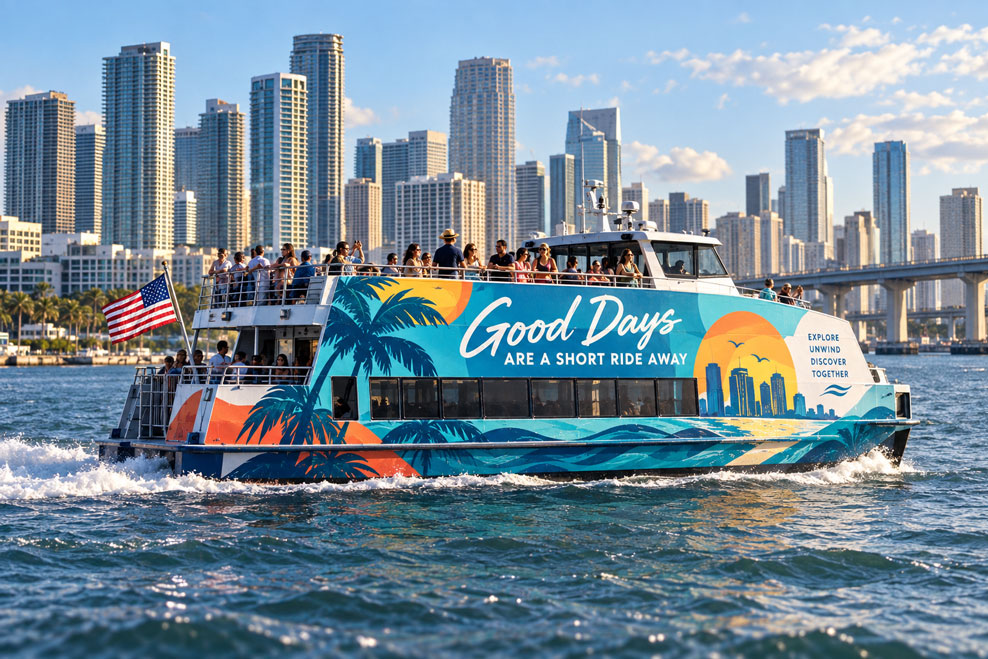
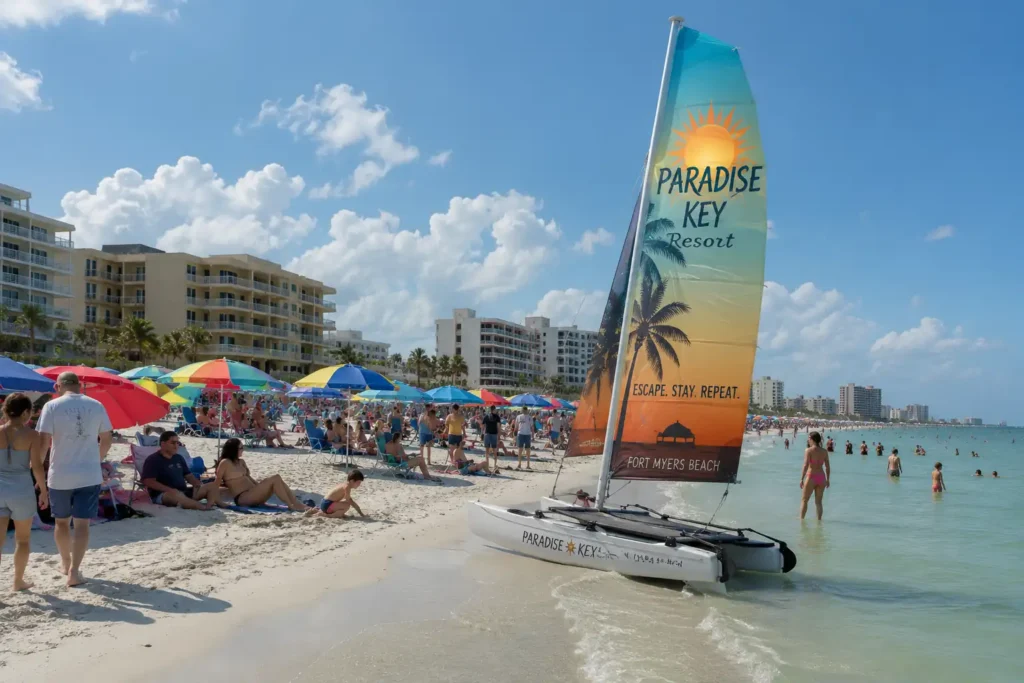
Most coastal campaigns have a gap in the plan, and it sits right where the audience spends the day. Billboards cover the causeways, DOOH covers hotel lobbies and transit screens, and social follows people onto their phones. Once they cross the dune line and set up a towel, though, the usual OOH inventory mostly runs out. That stretch of sand is where kite banner advertising for agencies starts to make sense as a planning tool.
This guide is for media planners, OOH buyers, and agency strategists who want to judge the format the way they would judge any other channel. It covers where kite banners sit next to billboards, DOOH, transit, and aerial, and which client objectives suit the format (and which do not). You will also find how to choose markets and flight windows, build creative that holds up over open water, and handle weather. The last sections explain what proof of performance you can hand a client and what you cannot. They also cover which factors shape a proposal, so you know what to ask for before coastal OOH goes into your next media plan.
In This Article:
- Why the beach is an OOH gap
- Where kite banners fit in the media mix
- Kite banner advertising for agencies: the right briefs
- Choosing markets and beach locations
- Planning flights, frequency, and seasonality
- Creative that reads from the sand
- How weather fits into the plan
- Proof of performance clients can trust
- Scoping kite banner advertising for agencies and brands
Why the beach is an OOH gap
Traditional out of home advertising is built around roads, transit, and foot traffic in commercial districts. That works well for commuters and shoppers. A beachgoer behaves differently. They arrive, park, walk past a few placements, and then spend hours in a place where very little media can physically go.
Static signage on the sand itself is rarely available as standard inventory, and beachfront properties control what appears on their own grounds. So a brand can own the drive into Miami Beach or the Jersey Shore and still have no presence where the audience actually relaxes, eats, drinks, and makes plans for the evening.
For suncare, beverages, hospitality, and action sports brands, that is a real problem. Their customer is often most receptive in exactly that moment: on vacation or on a day off, surrounded by the setting the product was made for. Coastal OOH advertising exists to cover that last stretch of the consumer’s day. If the category is new to your team, the overview of coastal OOH advertising is a good primer before you build a recommendation.
What agencies are usually solving for
When a planner adds a coastal layer, the goal tends to be one of a few things. Some want to finish the geographic story of a market buy so the brand shows up from the airport to the shoreline. Others need a seasonal or event campaign to have a presence at the destination itself. Some are after owned content and social moments the rest of the plan can use, and a few simply want to test an emerging OOH format with a contained budget. Keep the goal in front of you, because it shapes every decision that follows.
Where kite banners fit in the media mix
The most useful way to think about kite banner advertising is as an extension of an existing OOH buy. Each channel in a coastal market covers a different part of the day, and the kite covers the part the others miss.
- Roadside billboards and DOOH reach people on the way in, sometimes days before they reach the beach.
- Airport, transit, and hotel screens catch travelers as they arrive and settle in.
- Sponsorships and experiential activations create direct contact at events and venues.
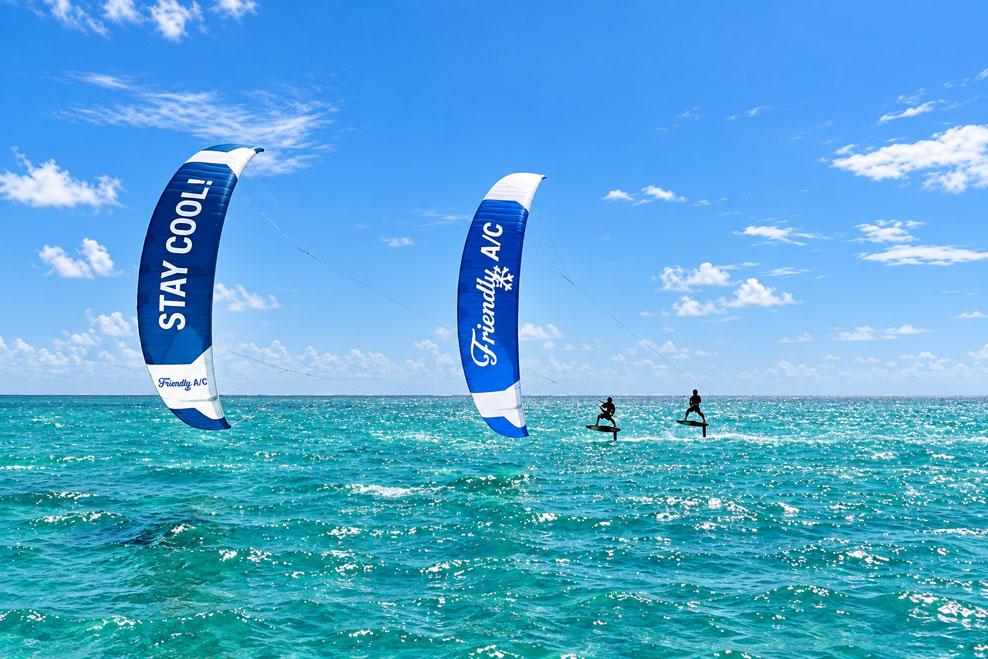
- Kite banners put the brand above the shoreline while the audience is on the sand or in the water.
- Social and digital extend all of it afterward, often using content captured at the activation.
Seen that way, kite banner advertising for agencies does not compete with the billboard budget. It picks up where the billboard leaves off.
Kite banners compared with other aerial formats
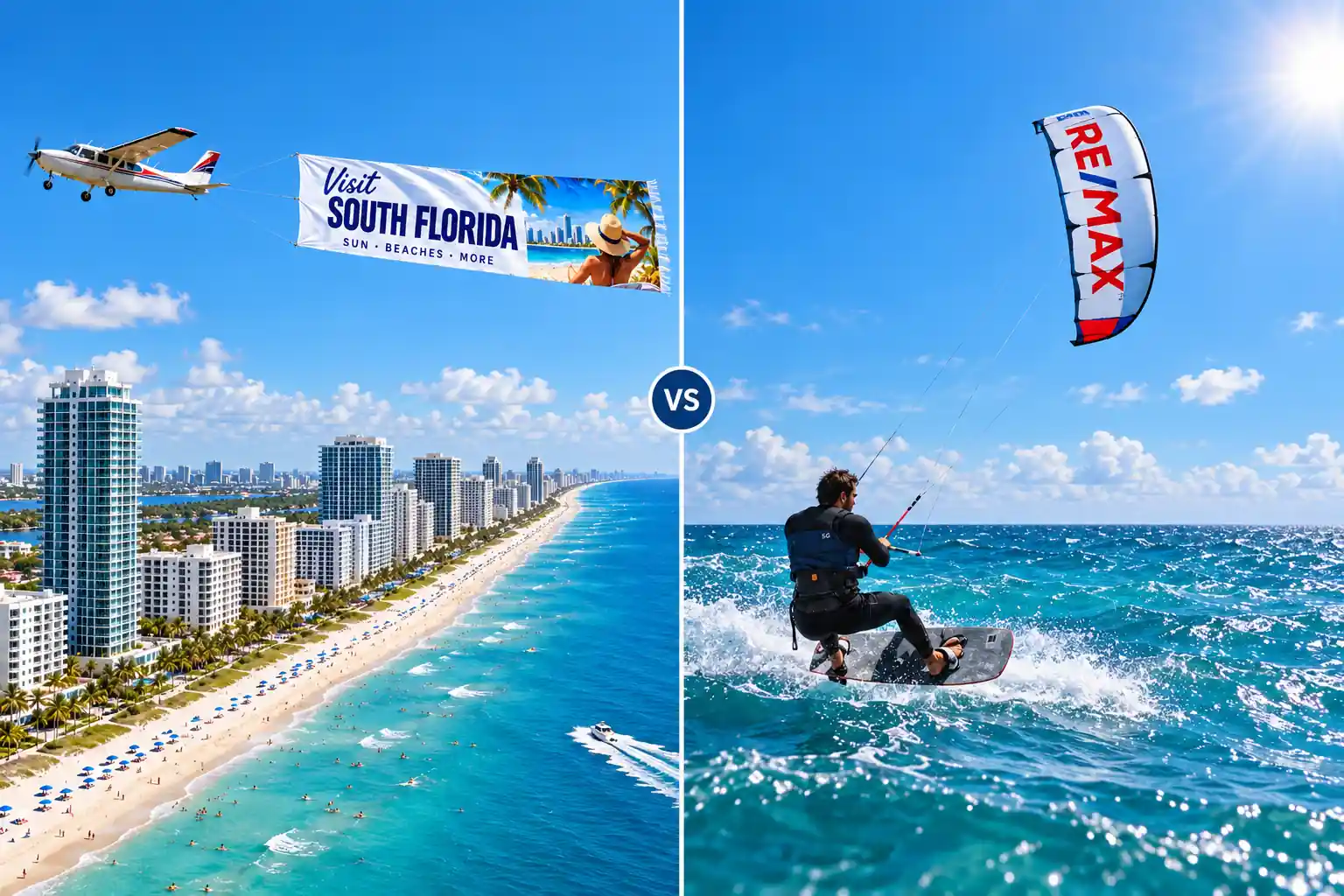
Planners often compare kites with airplane banners, since both put a message in the sky over the beach. The operating model is different. A towed aerial banner travels along the coast and loops back, so exposure comes in passes. A kite banner is flown by an operator on site and holds over a chosen stretch of shoreline for the length of the flight window. Plane banners can cover a long coastline in one flight, while kites concentrate presence in one location. Which one fits depends on the brief, and this comparison of kite banners and airplane banners goes deeper on the choice.
Working alongside DOOH and social
The strongest integrated campaigns carry one creative idea across every format. A beverage brand running DOOH near the causeways can fly the same headline over the water, then post activation footage on social that afternoon. Campaign photography and video from the flights give the social team assets that look nothing like standard billboard creative, which can make a pitch deck or a campaign recap more memorable.
Kite banner advertising for agencies: the right briefs
Not every brief needs a coastal layer. Kite banners work best when the client has a clear reason to be at the beach, and some objectives fit naturally.
Strong fits
- Brand awareness in a destination market during peak visitor periods
- Products people use at the beach, such as suncare, body care, beverages, swimwear, and action sports gear
- Hospitality, tourism, and destination marketing aimed at visitors who are already in market
- Event windows like Spring Break, holiday weekends, and Art Basel Miami Beach, when coastal crowds are concentrated
- Real estate, insurance, financial services, and automotive brands that want visibility with coastal residents and second home buyers
- Launches that need a visible moment plus content to share
For more ideas on how brands show up at the coast, see these beach advertising approaches.
Weaker fits
The format is less suited to direct response campaigns that depend on a click, a promo code, or detailed offer copy. A kite banner carries a short message seen at a distance, so long URLs, phone numbers, and fine print do not read well. It is also a poor match for audiences that rarely visit the coast, or for briefs that require delivery on one fixed date with no flexibility, because flights depend on wind and weather.
Being upfront about those limits helps the agency. A coastal layer recommended for the right reasons is much easier to defend in a client review than one added because it looked unusual in the deck.
Choosing markets and beach locations
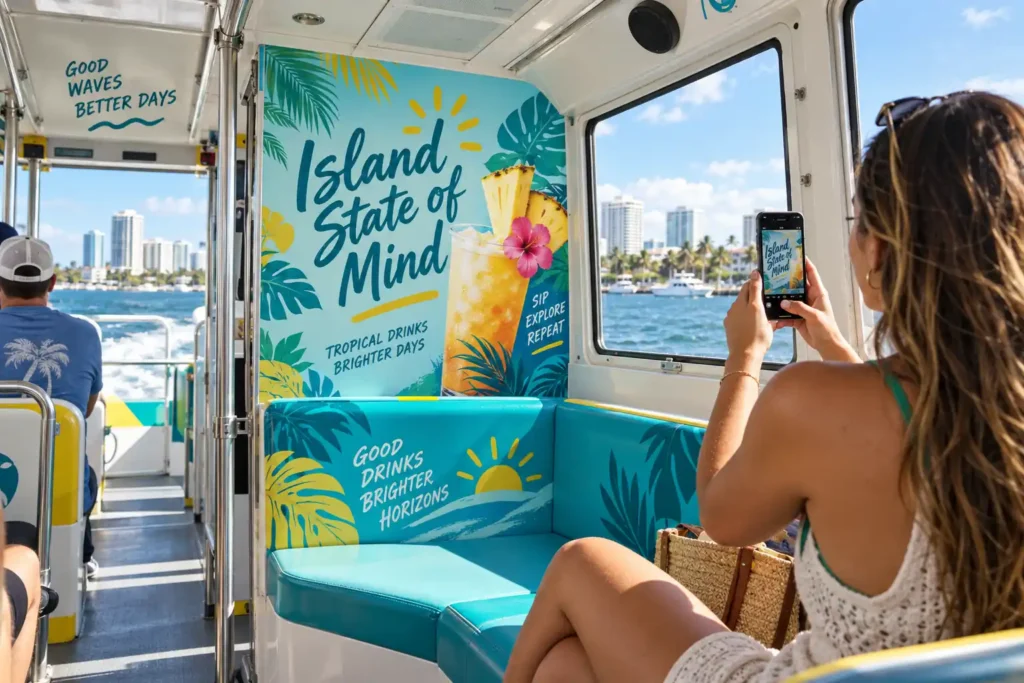
Market selection should start with the client’s audience data and existing buy, not with a list of famous beaches. Ask where the client already runs OOH, where people in the target segment travel, and which beaches carry the heaviest crowds during the campaign window.
KiteBanners’ current and planned footprint includes major coastal destinations in South Florida, California, and the Jersey Shore. Even within one region the audience shifts from beach to beach. In South Florida, Miami Beach, Fort Lauderdale, and the Palm Beach County coastline each draw their own mix of international tourists, local families, and weekend visitors, so the right location depends on who the client wants to reach.
Questions to answer for each location
- Who is on this beach on the days and hours we plan to fly?
- Does the location connect to other placements in the plan, such as nearby billboards, hotel partners, or an event venue?
- Is there a reason the brand belongs here, like a local hotel, a retail partner, or a product sold nearby?
- What local rules and access considerations apply?
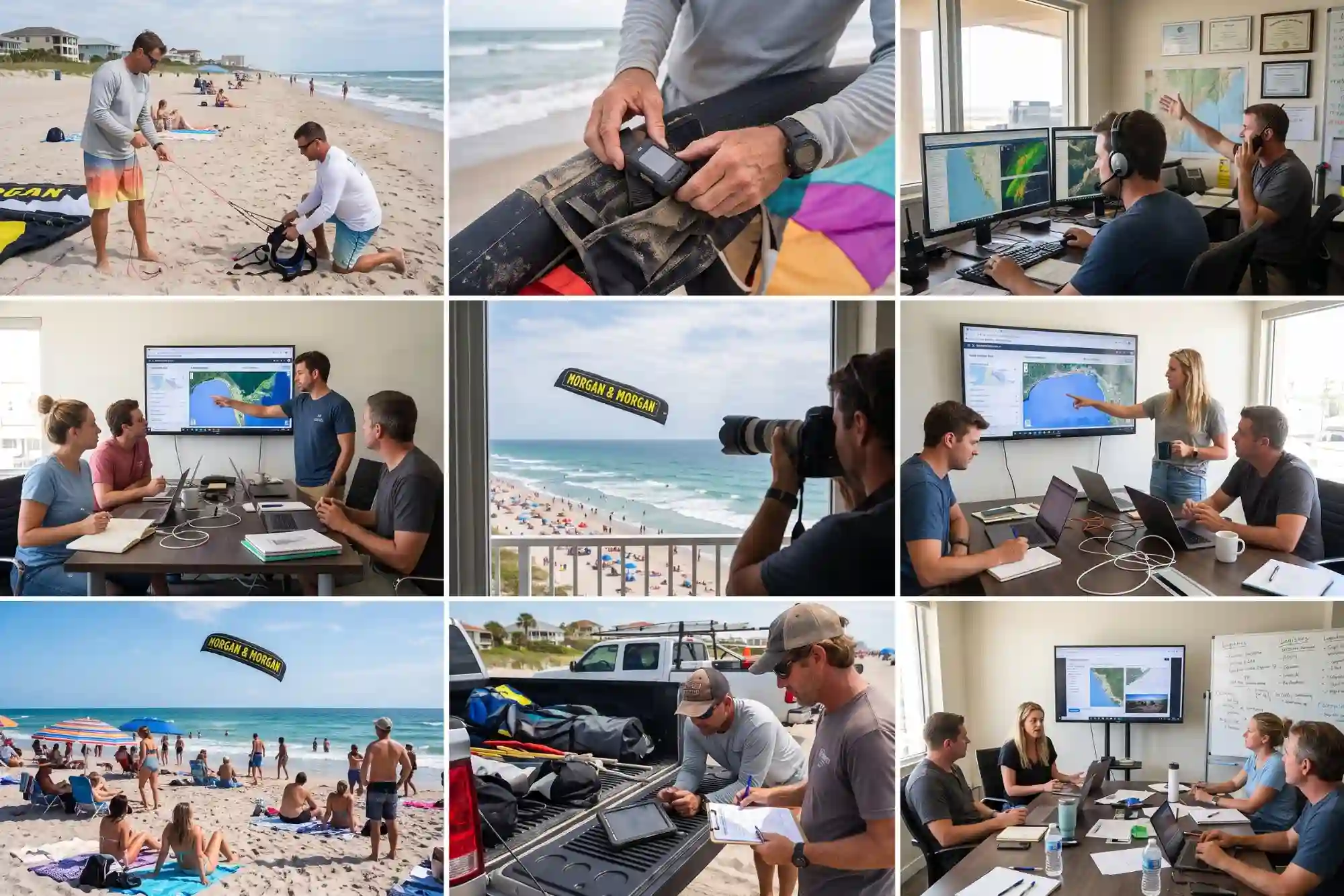
With kite banner advertising for agencies, KiteBanners handles activation logistics for each location, and the agency brings the audience logic. That split works well. The planner decides why a market matters, and the operator handles how the flight happens there.
Planning flights, frequency, and seasonality
Coastal OOH is planned around flights. A flight is a scheduled window when the kite is in the air over a chosen location. The planning variables will feel familiar to any OOH buyer, even though the inventory looks nothing like a billboard face.
Duration and activation frequency
A single day can work for an event or a launch moment. Brand awareness goals usually call for repeated flights across several weekends or a full season, so returning visitors and local residents see the campaign more than once. Campaign frequency here means how often the audience has a chance to encounter the message, and that comes from repeat activation days rather than from a screen loop.
Seasonality by market
Peak periods differ by coast. South Florida draws heavy visitation in winter and spring, while the Jersey Shore is centered on summer. California beaches stay active through much of the year, with weekends and holidays carrying the most traffic. Build the flight plan around the client’s selling season first, then line it up with when each market is busiest.
Timing within the day
Beach crowds tend to build through the late morning and stay into the afternoon, especially on weekends. Coordinate flight windows with those hours and with any related events, so the kite is up when the sand is full. If the plan includes a sponsored event, a beach club partner, or a nearby DOOH takeover, schedule them together so the audience meets the brand in more than one place on the same day.
Creative that reads from the sand
Kite banner creative behaves more like a billboard seen across a long distance than like a print ad. The audience is looking up from a towel or back toward shore from the water, usually for a few seconds at a time, and the background is open sky.
- Lead with the logo or a single brand mark large enough to identify at a glance.
- Keep the headline to a handful of words. If it needs a second line, it is probably too long.
- Use strong contrast. Pale blues and whites can disappear against a bright sky.
- Skip URLs, QR codes, and phone numbers unless they are very short and the brand accepts the tradeoff.
- Keep the idea consistent with the rest of the campaign so the coastal layer reinforces the billboards and social.
KiteBanners provides creative adaptation as part of campaign execution. That matters because agency creative is usually built for rectangular billboard and screen ratios, and adapting it for a kite takes more than resizing a file. Bring the creative team in early so they understand the format before the concept is locked.
Think about the photo, too
Activation photography and video often end up in social posts, client recaps, and award entries. Creative that looks good against sky and water in a wide shot will work harder across the whole campaign, so review the concept as a photograph as well as a sign.
How weather fits into the plan
This is one of the first questions buyers raise about any beach advertising format, and it deserves a straight answer. Kite banners need wind within a workable range to fly safely, and they do not fly in storms, lightning, or other unsafe conditions. Some planned activation days will be affected.
KiteBanners monitors weather ahead of and during each activation. When conditions rule out a flight, the campaign plan should already spell out what happens next, such as a makeup date or a shifted flight window. Agree on those terms in the proposal before the campaign starts, not after the first windy weekend.
How to plan around it
- Build in more possible activation days than the minimum the campaign needs.
- Avoid tying the only flight to a single fixed hour when the client has any flexibility.
- Tell the client early that coastal OOH is weather dependent, the same way outdoor events are.
- Agree on how weather days are reported, so the final recap shows what was planned, what flew, and what was rescheduled.
Handled this way, weather becomes a known planning variable rather than a surprise in the wrap report. Most experiential and event teams already plan this way, so the conversation with the client is usually easier than planners expect.
Proof of performance clients can trust
Agencies need documentation they can pass to a client without overstating what happened. Coastal OOH measurement has its own challenges, and it helps to keep four kinds of information clearly separate.
Verified execution data
KiteBanners uses GPS flight tracking to record where and when each kite flew. That gives the agency proof of execution and flight coverage: the activation ran, at this location, for this duration. Activation documentation and campaign photography or video add visual proof on top of the flight data.
What GPS data does not prove
GPS confirms the flight. It does not measure whether people looked up, how many impressions were delivered, or whether the campaign moved brand lift or sales. Presenting it as an attention metric would be misleading, and an experienced client will catch it.
Estimates, third party data, and measured outcomes
Audience opportunity can sometimes be estimated from sources like tourism data or published beach attendance figures, but those numbers are estimates and should be labeled that way in any report. Measured outcomes, such as a brand lift study, search lift in the market, or sales data during the flight period, need their own research design. If the client needs those results, plan the study before launch. The guide to OOH measurement for coastal campaigns covers this in more detail.
Scoping kite banner advertising for agencies and brands
KiteBanners builds each proposal around the specific campaign, so there is no one rate card answer. The factors that drive scope are predictable, though, and knowing them helps you write a better request.
- Market and specific beach locations
- Campaign duration and number of activation days
- Number of kites flying at once
- Creative requirements and production of the banners
- Geographic coverage across one market or several
- Timing, including peak season and major event dates
- Campaign objectives and the documentation or content the client needs
What to include in your request
The more context in the brief, the more useful the recommendation. Share the client’s category, target audience, markets under consideration, campaign dates, the rest of the media plan, and the main objective. If the coastal layer has to tie into an event, a launch, or a specific DOOH buy, say so up front.
KiteBanners has run a campaign for RE/MAX, and agencies can ask about relevant campaign examples when they evaluate the format for their own clients.
Putting coastal OOH into your next plan
Kite banner advertising for agencies is most useful when it fills a specific gap: the hours a coastal audience spends on the sand, out of reach of most traditional and digital OOH. As one layer in an integrated campaign, it can extend a market buy to the shoreline, give seasonal and event campaigns a presence at the destination, and produce content the rest of the plan can use.
The planning work is familiar. Match the format to the right objectives and pick markets based on the audience. Schedule flights around the selling season, adapt creative for distance and sky, and build weather flexibility into the schedule. When the campaign wraps, report execution data honestly and keep estimates labeled as estimates.
If you have a coastal market or an upcoming campaign in mind, talk with KiteBanners about a campaign recommendation for your client. Share the market, dates, and objective, and the team can show how a coastal OOH layer would sit alongside the rest of your plan.