
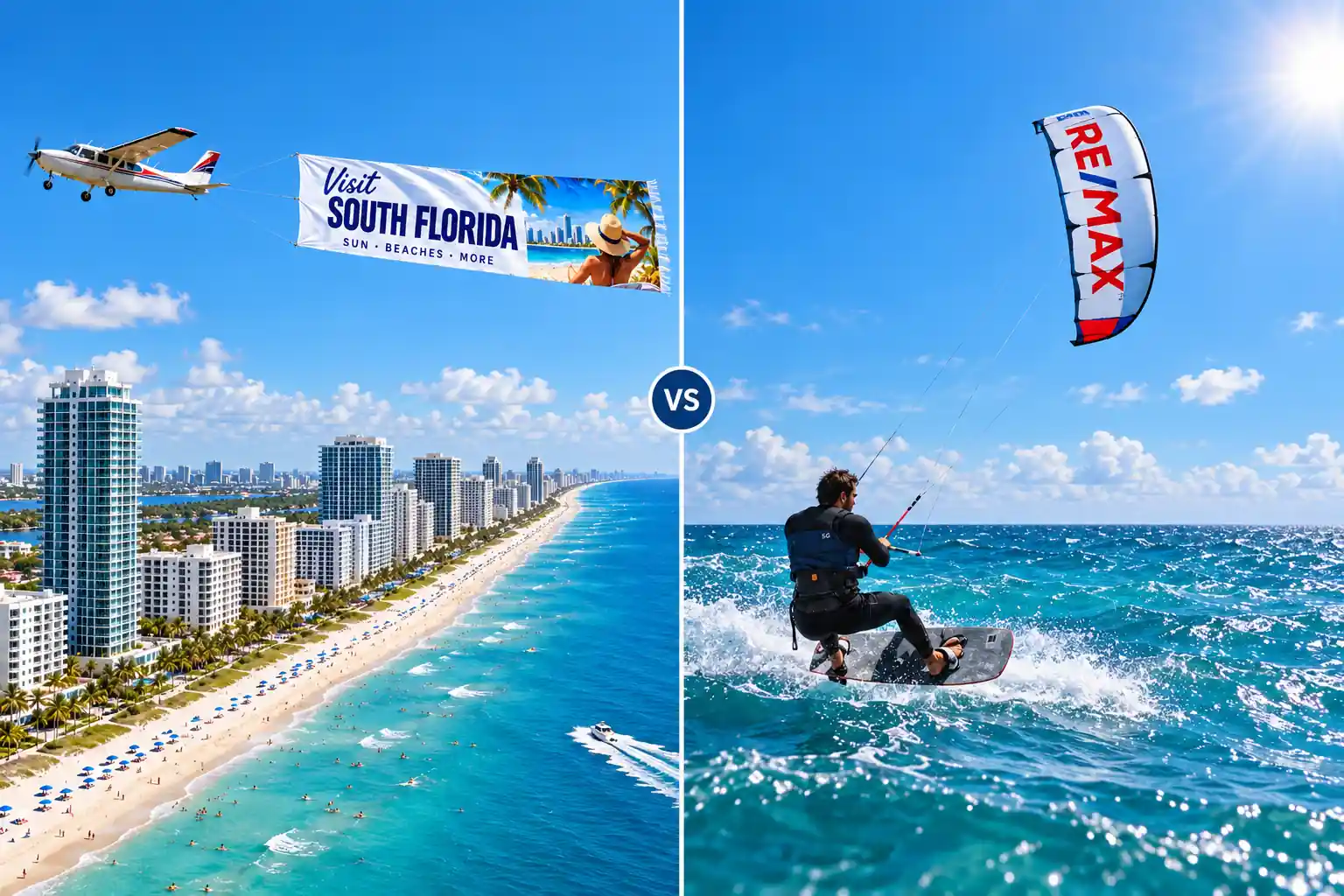
Beach advertising is not one media format. It is a collection of ways brands can reach consumers before they arrive at the shoreline, while they spend time on the sand or water, and as they move through nearby resorts, boardwalks, restaurants, events, parking areas, and transportation corridors.
That distinction matters for media planners. A beach audience can be geographically concentrated but behaviorally diverse. Residents, tourists, hotel guests, families, event attendees, surfers, boaters, restaurant patrons, and day visitors may all occupy the same coastal market for different reasons. The best media choice depends on which segment matters, how long the campaign needs to run, how much interaction is required, and what type of proof or measurement the buyer expects.
This guide reviews 12 beach advertising options and explains how to compare them. It also shows where coastal OOH can complement billboards, digital OOH, transit, sponsorships, experiential media, paid social, and other channels rather than compete with them for the same role.
In This Article:
- Why Beach Advertising Needs a Distinct Media Strategy
- 12 Beach Advertising Formats for Brands
- How to Choose Beach Advertising by Campaign Objective
- Plan Around Audience, Season, and Location
- Creative Principles for Beach Advertising
- Measurement and Proof for Coastal Campaigns
- Integrate Beach Advertising With the Media Mix
- Agency Checklist Before You Buy
Why Beach Advertising Needs a Distinct Media Strategy
Beach environments deserve intentional planning because they can sit outside the normal coverage pattern of city media. Consumers may encounter billboards, transit, retail screens, and mobile ads on the way to a destination, then spend several hours in a shoreline environment with fewer conventional advertising structures.
The coast is also economically significant. NOAA reports that coastal counties are home to almost 40 percent of the U.S. population. Its 2024 Open Economics data shows that coastal tourism and recreation directly employ more than 2.5 million people and contribute approximately $207 billion in annual GDP. Sources: NOAA coastal demographics and NOAA coastal tourism and recreation.
Florida offers a useful example of how central the beach can be to visitor behavior. VISIT FLORIDA reports that beach or waterfront activities were the most popular activity among domestic visitors in 2025, cited by 36 percent. That figure is specific to Florida, but it demonstrates why brands targeting travel and leisure audiences may need a media layer designed specifically for the shoreline. Source: VISIT FLORIDA Research FAQ.
Beach advertising therefore works best as a location strategy. The planner identifies where the target audience gathers, which moments have the most contextual value, and which format can create useful visibility or engagement in that setting.
12 Beach Advertising Formats for Brands
The options below serve different functions. Some create broad visibility. Others offer repeated exposure. A few support direct interaction. Others reach the audience before or after the beach itself. A strong plan may combine several.
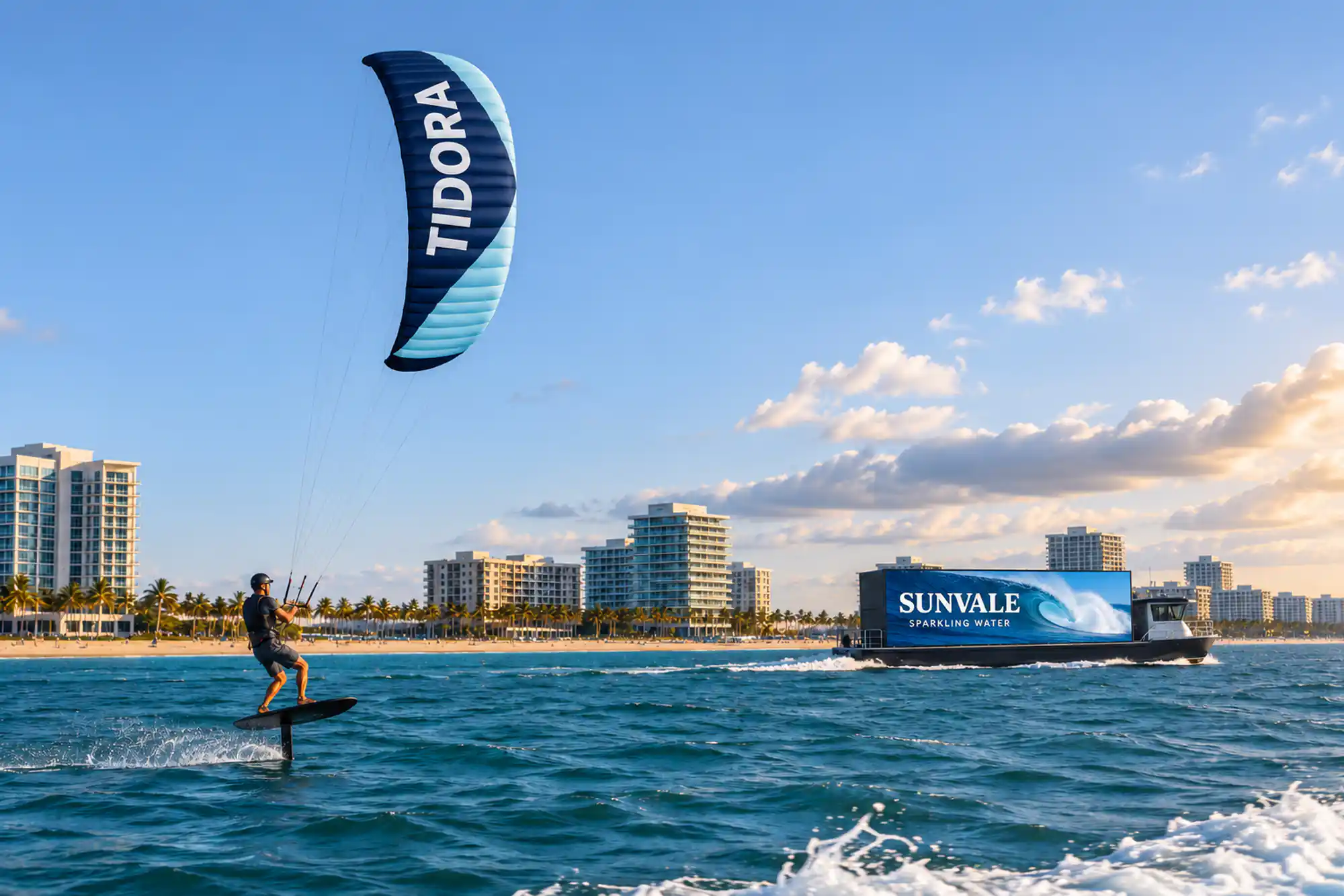
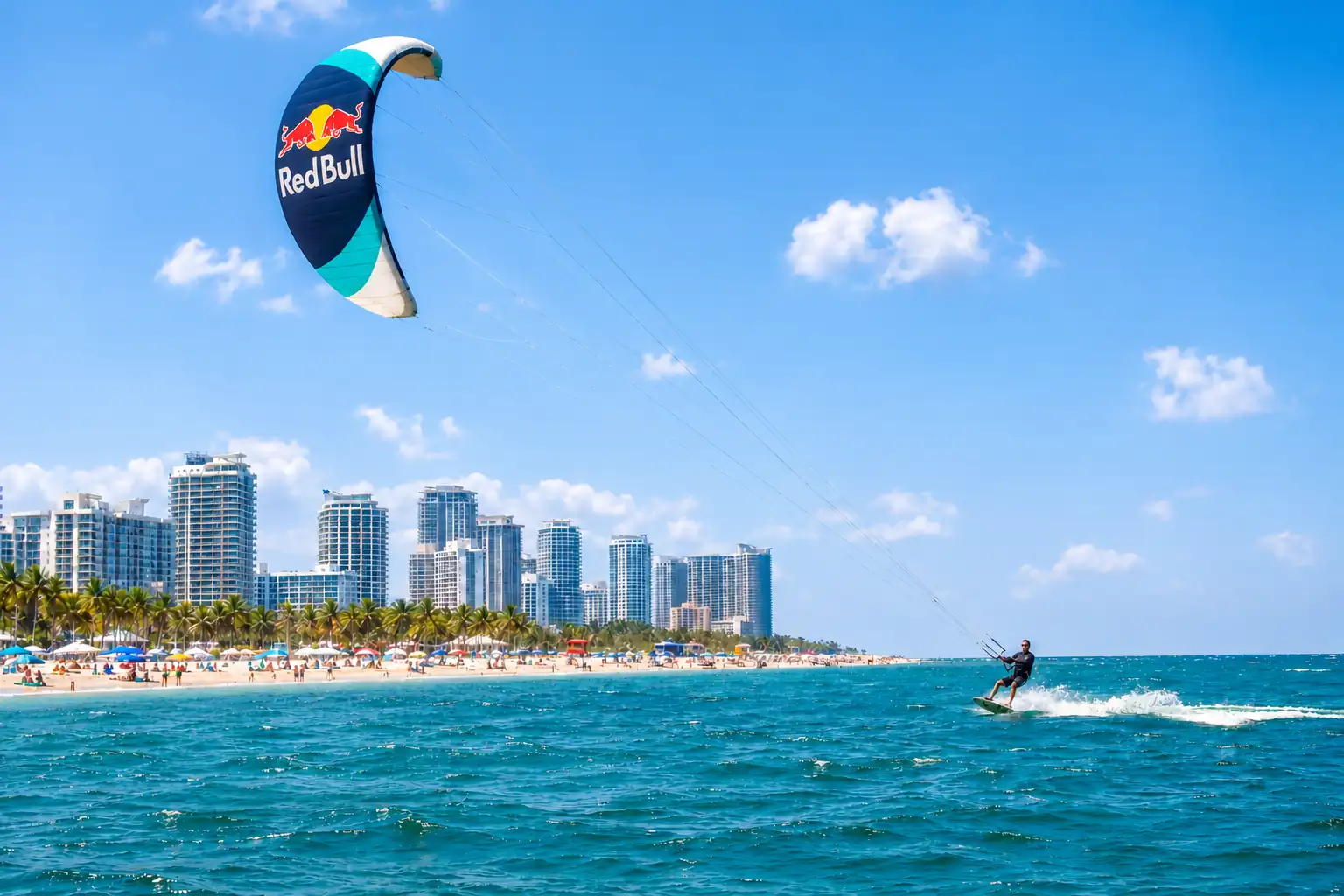
1. Kite banner advertising
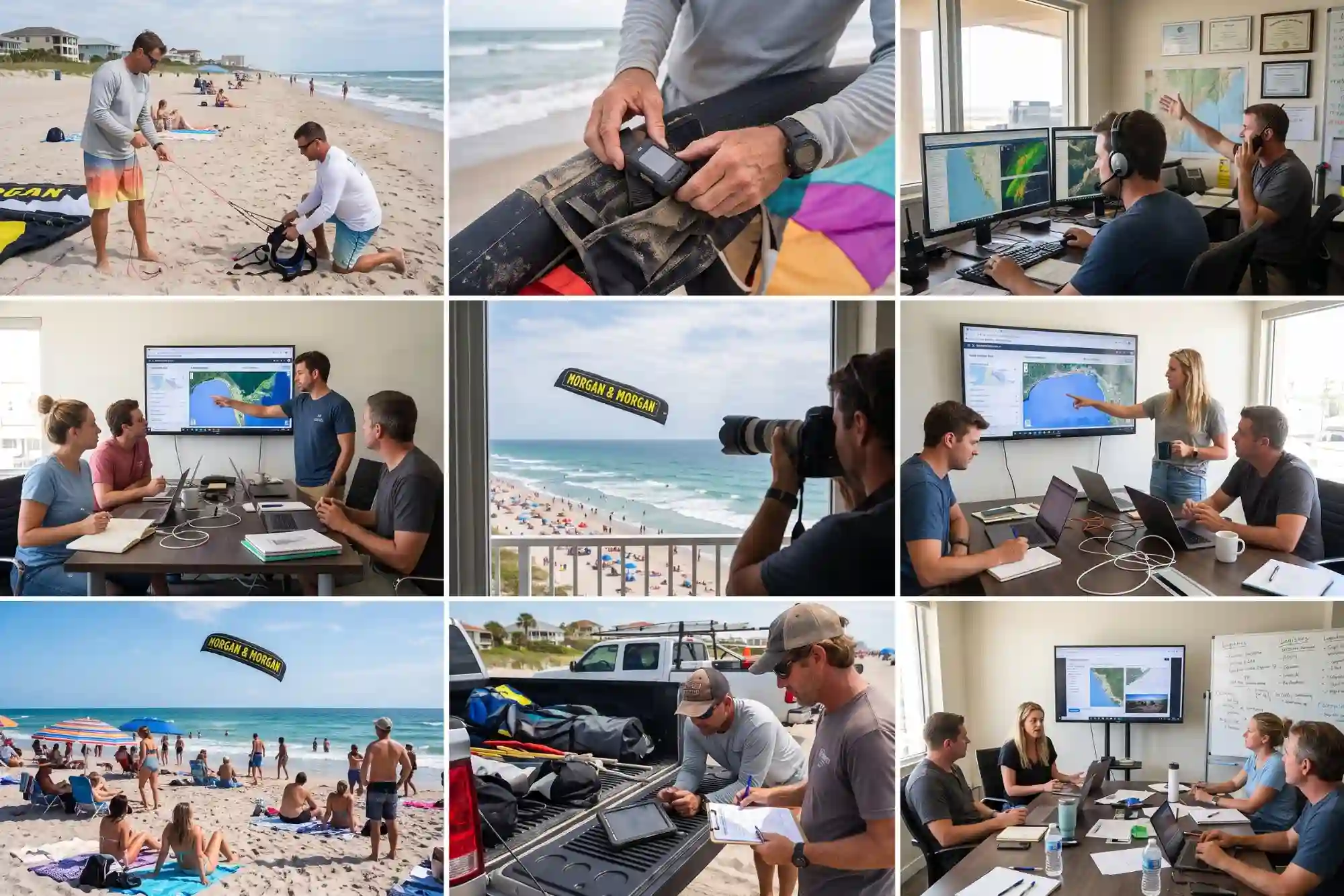
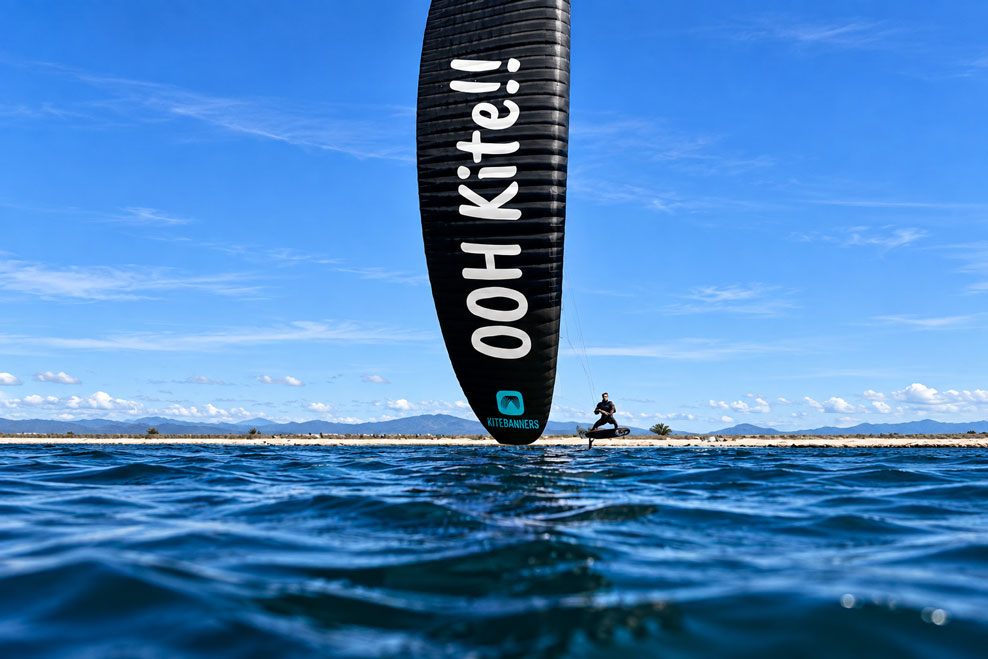
Large branded kites can create moving visual presence above a beachfront audience while operating offshore. KiteBanners uses professional operators, creative adaptation, weather monitoring, GPS flight logs, activation summaries, and campaign imagery. The format is suited to brand awareness, launch visibility, seasonal campaigns, and coastal extensions of larger OOH plans. Source: how kite banner campaigns work.
2. Airplane banner advertising
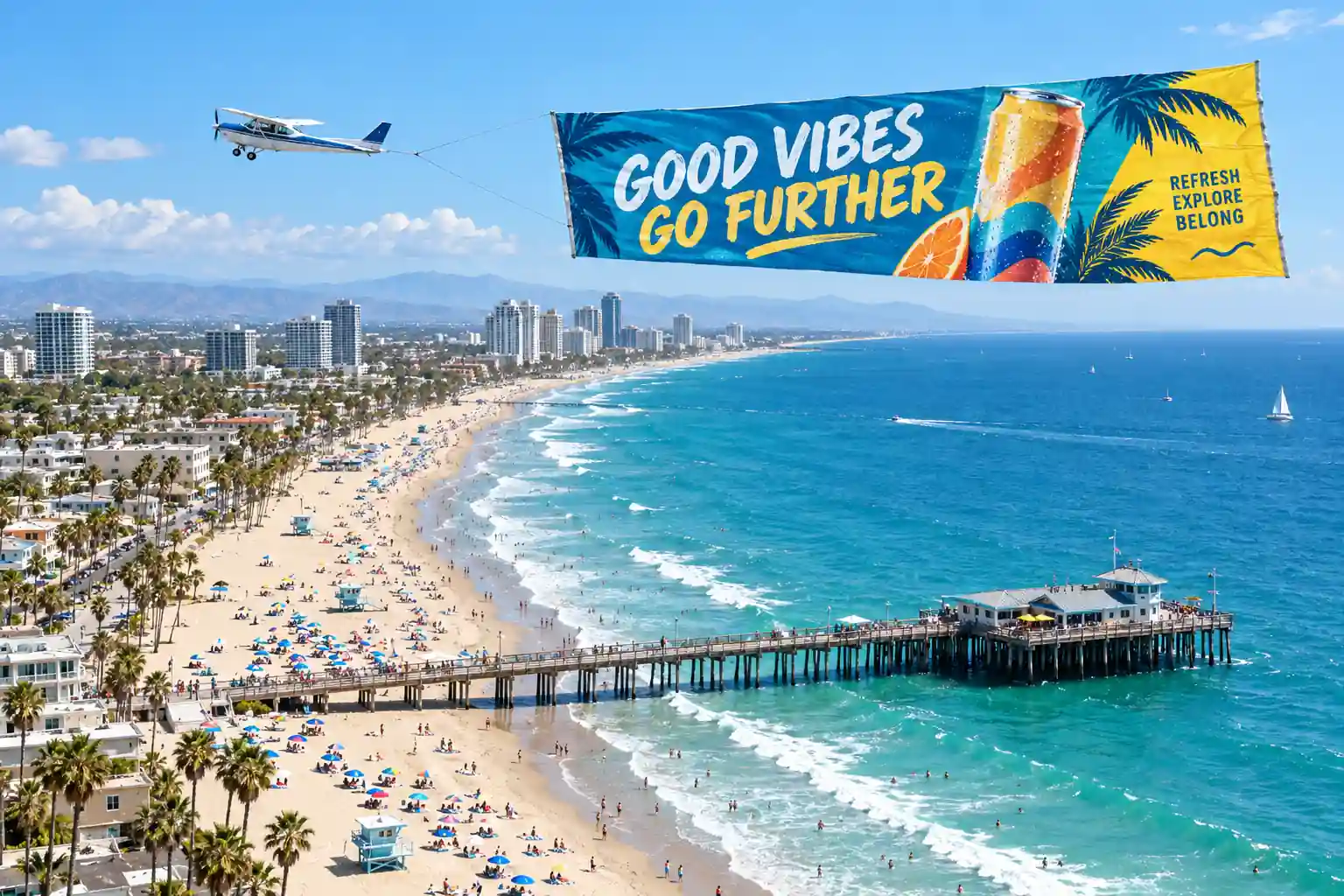
Airplane banners are a familiar aerial beach format. They can cover long stretches of coastline during a defined flight period and work well for concise, high contrast messages. Buyers should compare route length, flight duration, frequency, creative dimensions, operating rules, and documentation rather than treating every aerial format as equivalent.
3. Digital billboard boats
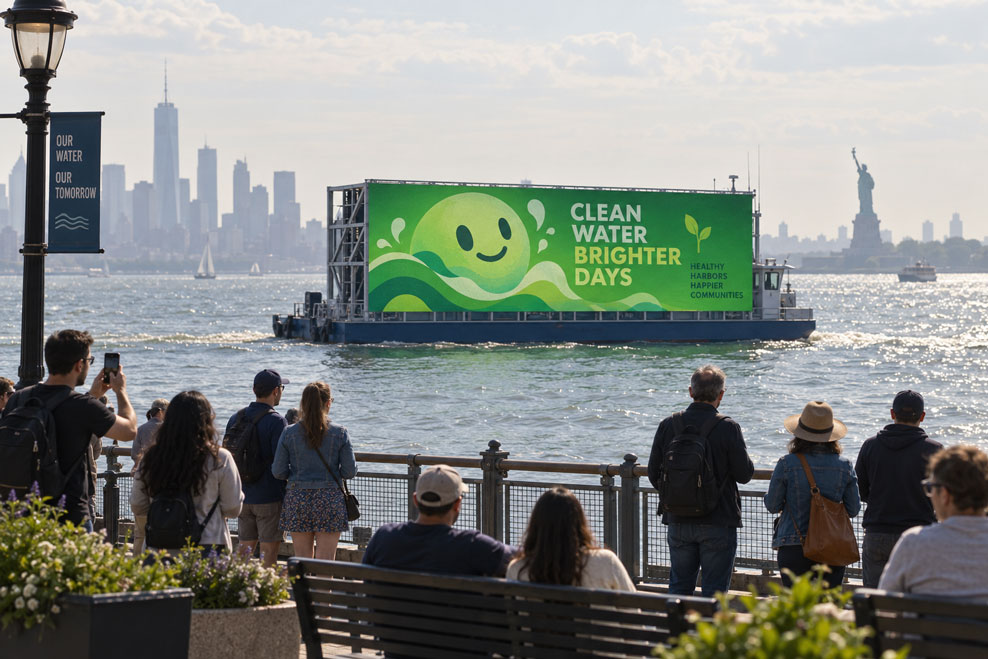
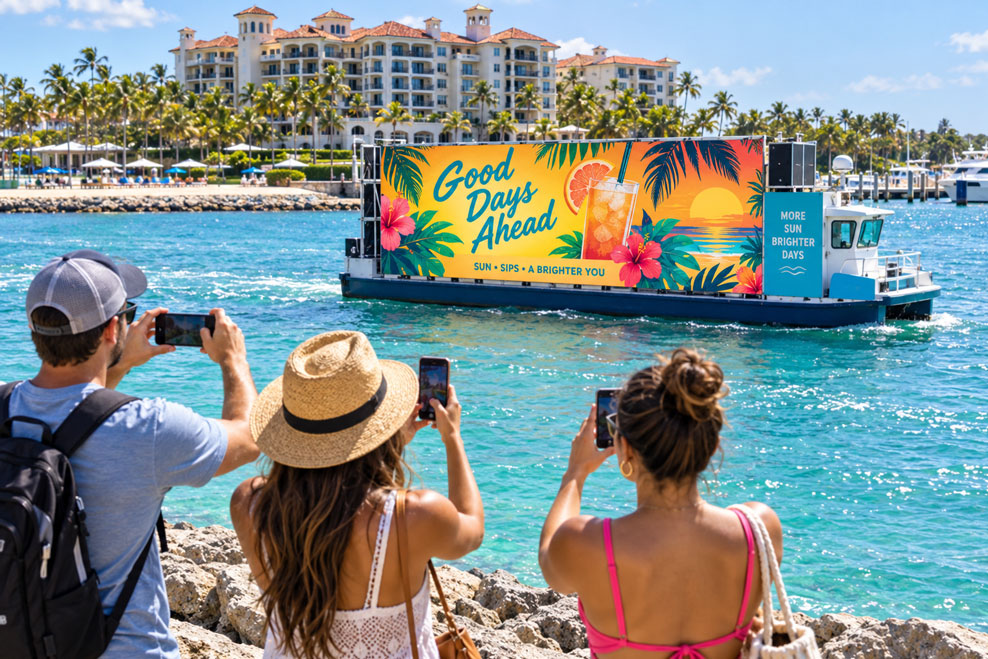
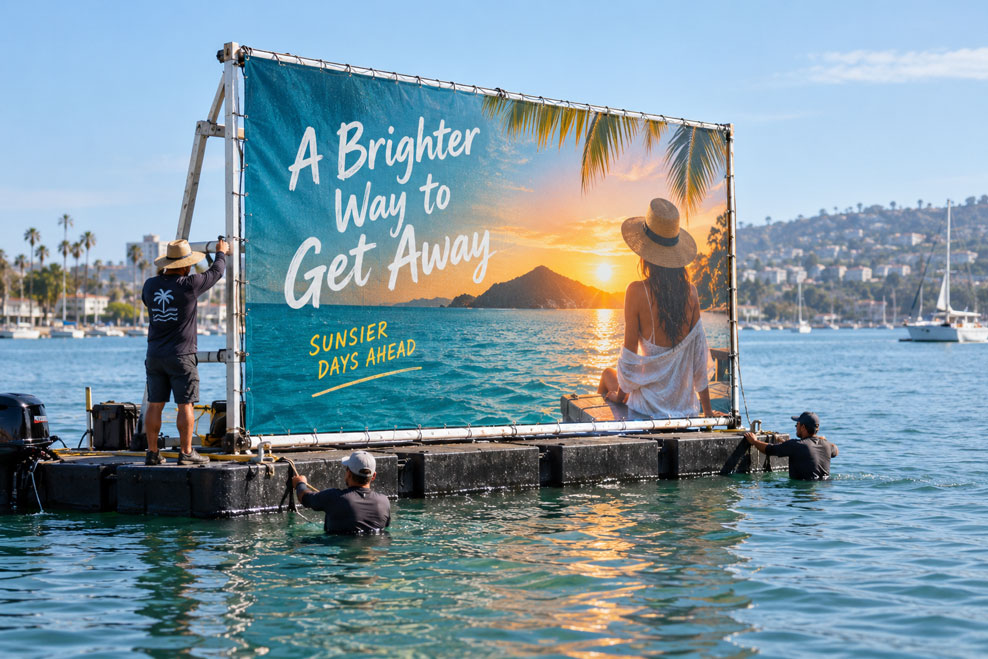
Boats equipped with digital screens can move through waterways while remaining visible from shore. They are especially relevant around harbors, waterfront nightlife, marinas, festivals, and dense pedestrian districts. Digital capability allows creative rotation, but brightness, sight lines, route timing, local restrictions, and viewing distance are important planning variables.
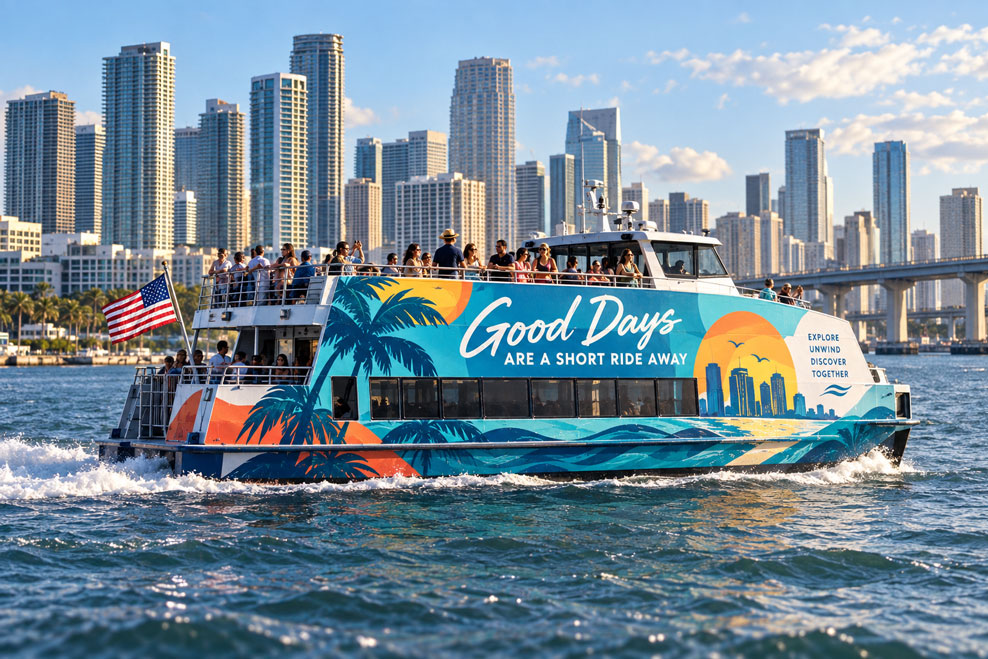
4. Ferry and water taxi advertising
Ferries and water taxis can offer exterior wraps, interior panels, terminal placements, sponsorships, and sometimes digital inventory. These formats behave more like transit media because routes and passenger flows can be predictable. They may be a strong choice when the advertiser wants to reach commuters, tourists, or event visitors moving through a waterfront transportation network.
5. Branded boats and vessel wraps
A full or partial vessel wrap turns a boat into a moving branded asset. Unlike a digital screen, a wrap is persistent throughout the campaign and can support strong visual identity. The tradeoff is less creative flexibility once production is complete. Vessel media can be effective around waterfront events, hospitality districts, marinas, and leisure boating areas.
6. Beachfront digital OOH and place based screens
Hotels, restaurants, entertainment venues, retail centers, visitor hubs, and other beachfront properties may offer digital screens or place based networks. These placements can provide more predictable viewing environments than open water media and can support multiple messages, dayparting, or contextual creative.
7. Boardwalk and street furniture media
Boardwalk kiosks, information panels, street furniture, posters, and approved municipal inventory can reach pedestrian traffic near the beach. These placements can be useful for sustained local frequency because audiences pass them while walking between hotels, parking, restaurants, attractions, and beach access points.
8. Resort and hotel media
Resort media can include lobby screens, elevators, in room channels, pool areas, key card programs, printed collateral, Wi Fi sponsorships, or property partnerships. It is not always classified as traditional OOH, but it can be an important part of a coastal media plan because it reaches visitors during the broader destination experience.
9. Experiential popups and product sampling
Popups, sampling stations, fitness activations, shade structures, photo moments, and interactive brand experiences can create direct engagement. They can be effective for beverages, suncare, apparel, wellness, travel, and consumer products. They also require the greatest attention to staffing, permits, inventory, logistics, cleanup, and brand safety.
10. Beach event sponsorships
Surf competitions, volleyball tournaments, concerts, festivals, art events, airshows, and community programs can offer signage, hospitality, naming rights, booths, announcements, content, and on site activation. Sponsorship can deliver association with a specific occasion, but the advertiser should separate sponsorship rights from the actual media inventory and understand exactly what visibility is included.
11. Mobile OOH near beach access routes
Mobile billboards, wrapped vehicles, rideshare media, and other moving formats can cover the streets that feed a beach district. OAAA’s 2026 guide to moving and dynamic OOH specifically highlights transit, rideshare, vehicle wraps, mobile billboards, waterway media, and experiential formats as part of the expanding moving media landscape. Source: OAAA Moving and Dynamic OOH guide.
12. Transit, parking, and arrival point media
Beach audiences often pass through parking garages, shuttle stops, rail stations, bus routes, airports, or visitor transportation hubs. These placements can extend the campaign beyond the sand and create useful frequency before and after the beach visit. They are particularly valuable when the coastal market has strong public transit or a large tourism arrival funnel.
How to Choose Beach Advertising by Campaign Objective
The format should follow the objective. A campaign that wants mass visual presence may prioritize aerial or waterway media. One that wants conversation and trial may prioritize experiential activation. A third that needs persistent frequency may lean on place based, transit, hotel, or boardwalk inventory.
Brand awareness
For awareness, prioritize visual scale, location prominence, and recurring exposure, since the message needs to be processed quickly. Kite banners, airplane banners, boat media, vessel wraps, large event signage, and high visibility place based units can all play a role.
Product launch
A launch often benefits from a concentrated moment, especially when sampling and social content launch together. Combining a visually distinctive format with sampling, social content, public relations, creator partnerships, and retail support can make the beach activation part of a larger launch system rather than an isolated spectacle.
Tourism and hospitality
Travel, hotel, cruise, restaurant, and destination brands may want to reach people while they are already in a leisure mindset. Resort media, waterfront placements, kite banners, vessel media, and event sponsorships can connect naturally to the travel experience.
Retail and direct response support
If the campaign needs a measurable action, combine awareness media with a clearer response layer. Mobile, search, retail media, geotargeted social, promotional codes, or destination specific landing pages can capture interest that an outdoor placement creates.
Plan Around Audience, Season, and Location
A beach is not a uniform audience. Miami Beach during an international art event, Fort Lauderdale during a holiday weekend, a Jersey Shore town in summer, and a Southern California surf event can differ dramatically in audience composition and media conditions.
Start with the target consumer. Then assess visitation, resident population, hotel concentration, events, seasonality, weekday and weekend differences, dayparts, shoreline density, access routes, and operational restrictions.
Use current market data
Whenever possible, rely on tourism bureaus, government sources, event organizers, credible mobility data, and first party campaign documentation. Avoid building a proposal around a single oversized audience number that mixes residents, visitors, and potential exposures without explaining the method.
Plan the calendar before the creative
Seasonality can affect both audience size and media availability. Event windows may require early reservations, while weather sensitive formats need scheduling flexibility. Planning the campaign window early helps production, permits, staffing, and contingency planning stay aligned.
Confirm current vendor availability
Coastal media networks can expand or change seasonally. Buyers should verify which markets are active during the planned campaign, what local operating limitations apply, and whether a vendor can support the requested frequency. A market listed in a long term expansion plan is not the same as confirmed inventory for a specific date.
Creative Principles for Beach Advertising
Beach advertising competes with bright sunlight, open sky, water, movement, crowds, and leisure activity. Creative needs to work in that environment rather than simply reuse a digital display ad.
Make the brand recognizable immediately
Large logos, distinctive brand assets, strong contrast, and limited copy usually outperform dense layouts in outdoor settings. If the placement is moving or viewed at distance, the message should become even simpler.
Use the environment without becoming gimmicky
Contextual creative can be powerful, but the connection should feel relevant to the brand. A travel message that speaks to the destination, a beverage creative tied to a summer occasion, or a suncare campaign connected to outdoor activity can use the environment naturally.
Adapt one campaign idea across formats
A kite, boat screen, boardwalk panel, resort display, and sampling tent should not look identical, but they should feel related. Keep the same brand codes, campaign line, visual system, and strategic idea while adjusting information density to each format.
Measurement and Proof for Coastal Campaigns
Coastal campaigns can be measured, although buyers should first define exactly what kind of evidence they need. The first layer is proof of performance. The second is audience opportunity. The third is outcomes.
Proof of performance
For moving or activation based formats, ask for timestamps, routes, photos, video, placement records, operator logs, and other evidence that verifies execution. KiteBanners, for example, uses GPS flight paths and activation summaries to document where and when flights occurred.
Audience opportunity
Tourism counts, event attendance, beach participation, property traffic, passenger counts, and mobility data can estimate the potential audience. These figures should be sourced and clearly labeled. They should not be presented as verified ad attention unless the measurement method supports that conclusion.
Campaign outcomes
Brand lift, web visits, search activity, store traffic, inquiries, and sales require a separate research design. Depending on the campaign, an agency can use surveys, matched markets, tagged URLs, codes, search lift, location analytics, or other approved methods.
The broader OOH industry is moving toward more standardized measurement. OAAA has launched a measurement modernization initiative focused on transparent and comparable audience insight. Source: OAAA measurement initiative.
Integrate Beach Advertising With the Media Mix
Beach advertising is strongest when it extends a plan into a physical environment other channels do not fully cover. The buyer does not need to choose between a billboard campaign and a beach campaign if the two solve different coverage problems.
A travel brand might use airport OOH, paid search, connected TV, social video, resort media, and a coastal activation. A sportswear brand might combine retail, creators, event sponsorship, kite banners, and digital OOH. A financial services brand might use broad city OOH for reach, paid social for frequency, and premium coastal media to reinforce visibility among travelers and residents in selected markets.
Build a consumer journey
Think about arrival, destination, activity, and departure. Airport and highway media can introduce the campaign. Transit and hotel media can reinforce it. Beach media can maintain physical presence at the destination. Mobile and search can capture response. The result is a coordinated sequence rather than disconnected placements.
Plan content capture
Coastal activations can also generate striking photo and video assets. If amplification matters, define the content plan in advance, including shot list, crew, usage rights, delivery dates, social formats, and whether the content is intended for paid media, public relations, organic social, or internal sales use.
Agency Checklist Before You Buy
Before adding beach advertising to a recommendation, confirm the audience, objective, market, schedule, creative requirements, vendor operating model, reporting package, and contingency plan.
Ask about the audience
What data supports the market recommendation? Does it describe residents, visitors, passengers, event attendees, modeled beach participation, or measured traffic? How current is the source?
Ask about execution
Who handles permits, production, staffing, route planning, safety, weather monitoring, and make goods? What happens when an activation cannot run as planned?
Ask about measurement
What proves that the media ran? What estimates audience opportunity? And what, if anything, measures outcomes? These should be three separate answers.
Ask about total scope
Pricing for coastal campaigns can vary by market, duration, activation frequency, production, creative, number of units, staffing, content requirements, and timing. Request a proposal built around the campaign brief rather than comparing a single rate without understanding what it includes.
Conclusion
Beach advertising gives brands more than one way to reach people at the coast. The category includes kite banners, airplane banners, digital boats, ferries, vessel wraps, place based screens, boardwalk media, resort inventory, experiential programs, event sponsorships, mobile OOH, and arrival point media. Each format solves a different planning problem.
The strongest approach is to begin with the audience and objective, then choose the format. Media buyers should evaluate the quality of the location, creative visibility, operational reliability, measurement method, and role within the broader plan. When those pieces are aligned, beach advertising can extend an integrated campaign into a high value physical environment that conventional city media may not fully cover.
Looking for a coastal format to add to an upcoming OOH plan? KiteBanners offers kite banner advertising as one layer within the broader beach advertising landscape. Review the campaign formats, download the media information, or discuss a South Florida market opportunity to see whether the format fits your brief.